The Tactical Dilemma of Modern Hospitality
In military operations, a force multiplier is any factor that dramatically increases the effectiveness of a team without adding more personnel. It might be superior communication equipment, better logistics, or advanced intelligence. In the high-stakes arena of restaurant ownership, veteran business owners are constantly searching for that exact edge. The battle tonight is fought on two fronts: rising operational costs and the relentless demand for consistent, high-quality customer service.
Many owners look at restaurant customer service automation with skepticism. The fear is simple: technology might strip away the soul of the business. We worry that replacing a human voice with a machine will leave our guests feeling cold, ignored, and unvalued. This is especially true for concept-driven establishments, like a family-run Thai restaurant, where the dining experience is deeply tied to cultural warmth, hospitality, and a welcoming environment.
But true automation is not about replacing your ground forces. It is about equipping them. When you automate repetitive, low-judgment tasks—like answering basic phone calls, confirming reservations, and managing waitlists—you free your team to do what they do best: deliver exceptional, face-to-face hospitality. This hybrid model keeps your human staff where they matter most, right on the dining room floor, while algorithms handle the routine desk work in the background.
The True Cost of the Busy Signal
Think of your restaurant’s front desk like a tactical command center. During a Friday night rush, the phone rings incessantly. Your host is caught in a crossfire. Do they answer the phone to take a pickup order, or do they greet the family waiting at the door? If they pick up the phone, the family feels ignored. If they ignore the phone, you lose a sale.
This is not a minor leakage; it is a major operational vulnerability. Studies show that implementing automated call centers and AI voice hosts can save restaurants an average of $9,051 monthly. More than that, by capturing every single inbound call and digital inquiry, these systems can triple delivery and takeout revenue. No menus are misread, no orders are lost to bad handwriting, and no customer is left listening to an endless busy signal.
When staff are stretched too thin, mistakes compound. An overworked server forgets a water refill, or a rushed host forgets to write down a seafood allergy. By introducing customer service automation, you build a protective perimeter around your guest experience. The routine details are locked down by software, meaning your human team can execute their hospitality missions with zero distractions.
The Digital Arsenal: Deploying the Right Tools
To win this battle, you need the right tools in your inventory. Modern restaurant service systems are no longer the clumsy, frustrating phone trees of the past. Today’s technology is conversational, incredibly fast, and simple to deploy.
1. AI Voice Hosts
Unlike old-school systems that force callers to press button after button, modern AI voice hosts use natural language processing to talk to your customers. They sound entirely natural, taking reservations, giving driving directions, and providing accurate operational hours 24/7. These systems sync directly with your live menu database. If a customer asks if your pad thai is gluten-free, the AI accesses your ingredient data instantly to provide a perfect, accurate answer. Because these hosts can handle dozens of calls simultaneously, you never miss a revenue opportunity during your peak dinner rush.
2. Automated Messaging and SMS Sequences
Once a guest makes a reservation, the system takes over the communication logistics. Automated SMS campaigns send instant booking confirmations, text reminders twenty-four hours before the seating time, and immediate notifications if a table becomes available early. This loop dramatically reduces the costly issue of no-shows. Instead of assigning a staff member to spend three hours calling guests to confirm their weekend bookings, your automation system handles it silently behind the scenes.
3. AI Agents and Sentiment Trackers
Beyond the front desk, digital agents are revolutionizing back-of-house operations. Generative AI agents are currently used to catalog incoming guest reviews across Google, Yelp, and social media. They instantly analyze customer sentiment, flagging negative reviews for your immediate personal attention while automatically drafting polite, on-brand responses to positive feedback. Some advanced AI agents even track inventory trends, warning you when your stock of core ingredients is running low based on current sales velocity.
4. Physical and Operational Automation
For quick-service models, physical touchpoints like self-service kiosks and smart table tablets reduce ordering friction. These systems shorten wait times and eliminate communication errors between the guest and the kitchen. In the back of the house, robotic kitchen systems can handle highly repetitive tasks like managing fryers or cleaning plates. This physical automation streamlines your labor costs, redirecting your payroll investments toward highly skilled culinary leads and customer-facing staff.
The Cultural Balance: Authenticity Meets Automation
Let us look at how this plays out in a highly specialized environment like a Thai restaurant. Thai dining is defined by a deep sense of community, respect, and meticulous flavor representation. The guest experience is heavily dependent on service quality. If a customer feels rushed or processed like a widget on an assembly line, the magic of the meal is broken.
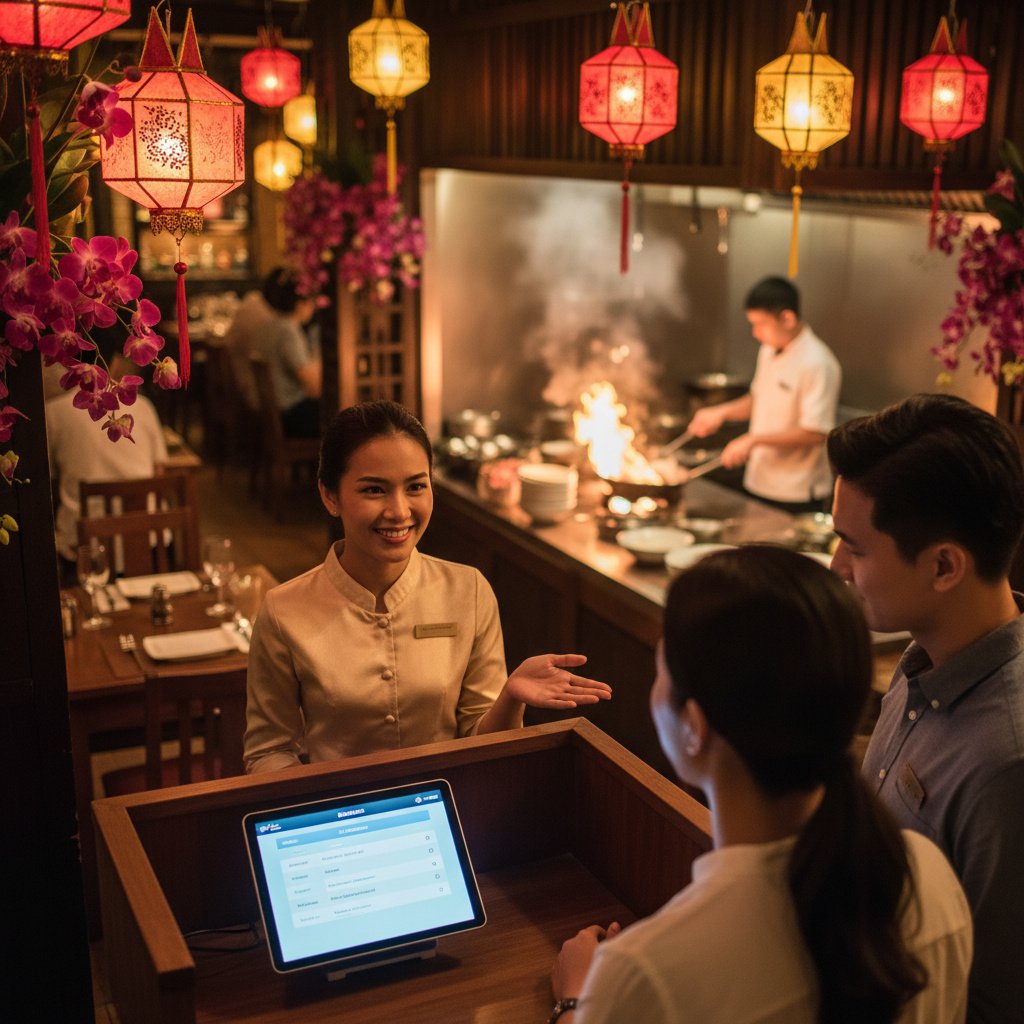
By delegating the logistics of order taking and table booking to automation, you preserve the cultural elements of the dining room. Your waitstaff are no longer running back and forth to a ringing telephone. Instead, they have the time to stand table-side, explaining the regional differences between a rich Massaman curry and a bright, spicy Green curry. They can ask about a guest’s spice tolerance with genuine curiosity, rather than rushing through a transaction to get to the next task.
Furthermore, automation acts as a bridge for cultural nuances. AI voice systems can be configured with multilingual support, ensuring that complex traditional ingredients, spice levels, and dietary allergen details are cleanly communicated in multiple languages without any translation errors. The technology handles the logistics, while the humans deliver the hospitality.
The Strategic Deployment Roadmap
As a veteran, you know that introducing new equipment without a clear operational plan leads to immediate failure. You must roll out automation strategically to keep your brand from feeling cold and machine-driven.
First, run a thorough audit of your daily operations. Find the repetitive, low-judgment tasks that consume your staff’s valuable time. This usually means phone orders, booking confirmations, and basic FAQs. Map out these friction points before spending any capital.
Second, select tools that integrate directly with your existing Point of Sale (POS) security networks and reservation databases. If your phone system does not talk to your kitchen display screen, you are creating more work, not less. Choose open platforms that connect easily and share data in real-time.
Third, train your team on the “why” behind the new technology. If your servers think the automation tools are there to replace them, they will resist the change. Explain that the AI is there to serve as their administrative assistant. It handles the paperwork so they can focus on delivering the incredible service that earns higher tips and keeps customers coming back.
Finally, always build in a clear human escape hatch. No matter how advanced your AI voice host or reservation chatbot is, some situations require human leadership. If a guest has a highly complex request, a dietary emergency, or a service complaint, the system must instantly route that call to a live manager with all the gathered context intact. Nothing frustrates a customer more than getting trapped in an infinite digital loop.
Tracking Your Operational Victory
You cannot manage what you do not measure. To evaluate the success of your new customer service tools, you must track key metrics across three distinct areas of your business:
Operational Success: Watch your missed call rate. Once automation is deployed, this number should drop to zero. You should also see a noticeable lift in order accuracy, resulting in fewer returned dishes and less food waste in the kitchen.
Financial Health: Monitor your labor-to-sales ratios. You should see a drop in labor hours required during off-peak times, paired with an increase in average check sizes and delivery volume. The system’s automated suggestive selling options (e.g., asking if a caller wants to add spring rolls to their order) will naturally drive transaction values up.
Customer & Space Experience: Track your online reviews and repeat-customer rates. High service quality leads to better reviews, stronger word-of-mouth marketing, and a loyal dining community. Additionally, evaluate your staff retention rates. When you remove the stressful, repetitive tasks that cause burnout, your team will be happier, more engaged, and far less likely to leave.
The Next Tactical Ridgeline
The pace of technological change is only accelerating. In the coming years, we will see predictive analytics move from the corporate world down to local independent restaurants. Imagine an AI system that forecasts your weekend ingredient needs by cross-referencing your previous sales data with the local weather forecast and community calendar events. Voice artificial intelligence will soon become the standard baseline for all phone orders and drive-thrus, providing natural, high-speed service to every customer.
For the modern veteran business owner, adopting automation is not about abandoning tradition. It is about defending it. By automating the friction, you protect your team, optimize your profits, and give your restaurant the operational freedom to do what it does best: serve fantastic food with unforgettable personal care.
Book a 15 minute discovery call to find out more today at https://digifidelis.com/calendar/











[…] businesses: Grants, tax breaks, and low-interest loans tailored for veteran businesses. […]
[…] platforms like Instagram and Facebook to create […]
[…] Examples of Workflow […]
[…] Automation tools collect and analyze data, giving you insights to make smarter choices. Google Analytics, for instance, tracks website…
[…] like LinkedIn and Instagram are powerful networking tools. Share valuable content, engage with industry leaders, and showcase […]