
The Unseen Leak in the Operating Line
In military operations, supply chain integrity isn’t an administrative afterthought; it is the baseline of operational readiness. When logistics leak, missions stall. Yet in commercial restaurant operations, seasoned leaders routinely tolerate a steady, silent bleed in the very center of their cash flow: the trash can.
Every seasoned operator knows the numbers by heart. Food cost percentages hover between 28% and 35%, prime costs dictate survival, and net profit margins routinely sit in single digits. What fewer leaders audit with forensic discipline is the direct relationship between kitchen discard and margin compression. Food waste is often treated as an inevitable cost of hospitality—spoilage during prep, unexpected customer drop-off, or over-portioning during a brutal Saturday evening rush.
Treating waste as an inevitable overhead cost is a structural error. Food waste is measurable, repeatable, and therefore manageable. When managed with tactical rigor, restaurant waste reduction shifts from an abstract ethical posture into a high-yield cost reduction strategy. Every dollar invested in systematic food-waste prevention generates roughly an $8 return in bottom-line savings. Across commercial kitchens, tracking discards reduces overall food costs by 2% to 6%, returning an average of more than two cents on every single dollar spent on cost of goods sold. When annual food sales hit seven figures, that two-cent delta compounds into the capital required to hire top culinary talent, upgrade kitchen hardware, or build an emergency liquidity buffer.
The Friction of Manual Tracking
The standard solution to waste has historically been clipboard logging. Operators instruct prep cooks and line chefs to weigh scrap bins, note spoiled perishables, and record line drops with a grease pencil. Within 72 hours, the system inevitably fractures.
During the middle of a dinner rush, when tickets are piling up and the pass is on fire, nobody stops to categorize a burnt batch of curry paste or scrape trim onto a manual scale. Clipboard logs become fictional exercises filled out during end-of-shift cleanups—if they are filled out at all. Manual systems generate fragmented data, demoralize kitchen crews, and yield retrospective accounting reports weeks after the capital has already been hauled out to the dumpster.
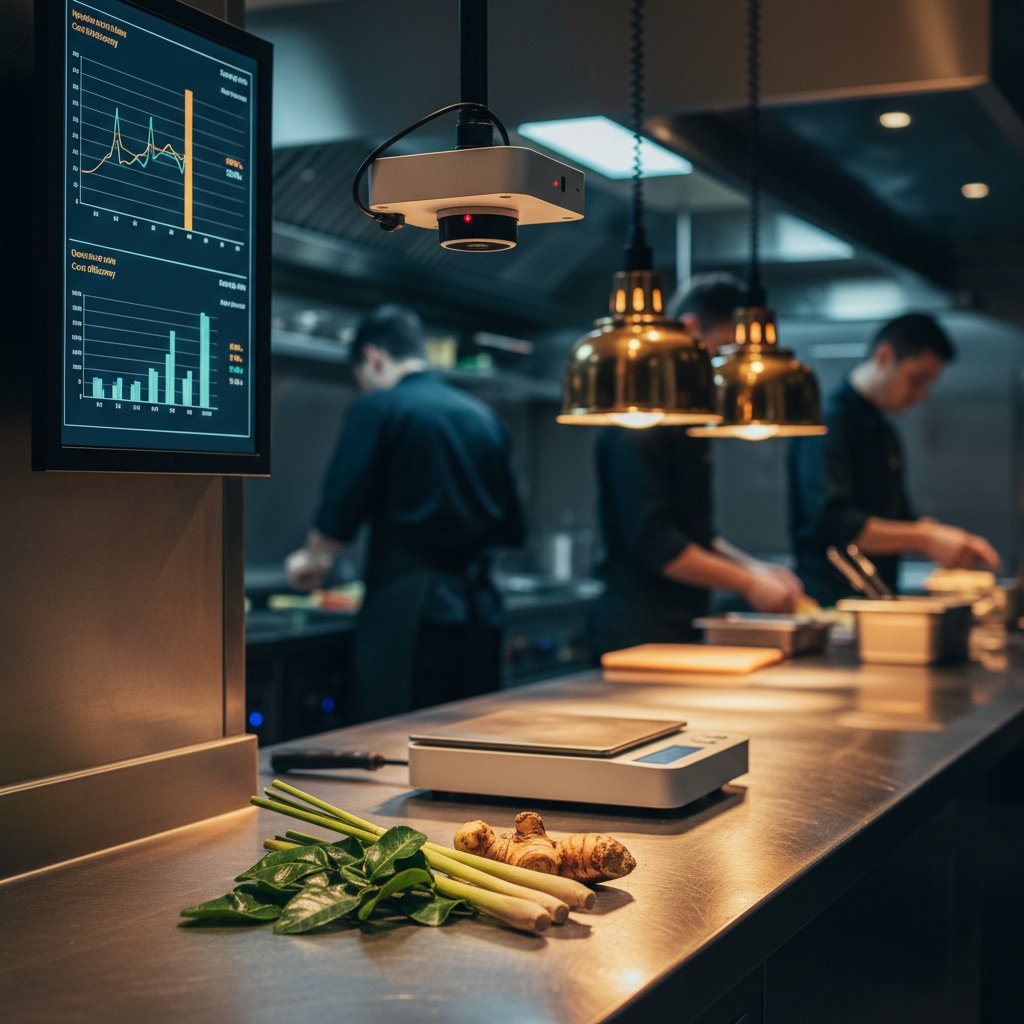
Automation eliminates this human friction. Contemporary restaurant waste reduction systems integrate smart scales, computer vision, and cloud analytics directly into the kitchen’s existing workflow. When a line cook scrapes a pan or clears prep scrap, overhead sensors and optical cameras instantly recognize the item, record its weight, and log the time, station, and shift. The cook presses a single confirmation icon or simply steps away, and the system logs the event in fractions of a second.
This automated measurement layer converts the garbage bin from an operational black hole into a live telemetry feed. Instead of asking why food cost spiked three weeks ago, operators review actionable dashboards that pinpoint precisely which station over-prepped, which prep cook generated excessive trim waste, and which menu item consistently comes back half-eaten from the dining room.
Deconstructing the Discard: Where the Losses Occur
To fix a system failure, you must classify its failure points. Automated waste analytics sort food waste into distinct operational tiers, each requiring a specific management countermeasure:
- Prep and Trim Waste: Raw ingredients lost before cooking begins. While vegetable peels and protein trimmings are normal, automated tracking flags when butchery yields drop below baseline or when line staff discard usable product out of haste.
- Overproduction: Food cooked in anticipation of demand that never materializes. This is rampant in batch-cooked concepts, high-volume banquet setups, and restaurants running rigid, oversized menus without dynamic forecasting.
- Line Errors and Spoilage: Kitchen mistakes, burnt components, improperly rotated walk-in inventory, and temperature excursions. Automation flags spikes by shift, allowing managers to identify training deficits before they metastasize.
- Plate Waste: Food returned to the dish pit by customers. When an automated system flags consistent plate waste on a signature dish, it signals an immediate portioning mismatch. Trimming two ounces of rice or adjusting an oversized noodle portion directly preserves margin without diminishing guest satisfaction.
A Blueprint for High-Yield Interventions
Software does not fix an engine; it merely shows where the fuel is leaking. The true leverage comes from pairing automated telemetry with disciplined, repeatable operational procedures. Industry research shows that prevention strategies deliver the highest financial return across the entire food lifecycle.
The fastest path to cost reduction begins with dynamic production planning. Automated waste data informs par levels with mathematical clarity. If the analytics reveal that 15% of your braised pork belly prepped on Tuesday afternoons is consistently discarded by Thursday morning, your par calculation adjusts immediately. Purchasing contracts contract accordingly, locking in working capital.
Second, menu engineering should reflect waste realities. A streamlined menu using cross-utilized ingredients eliminates dead inventory. High-waste dishes should either be re-engineered, re-portioned, or retired. Additionally, secondary recovery protocols—such as converting trimmings into robust stocks, house-made seasonings, or staff meals—close the loop before waste reaches the bin.
The Thai Restaurant Case: Authenticity Meets Modern Sourcing
Consider the structural demands of running an authentic Thai restaurant. Traditional Thai cuisine is built on highly aromatic, delicate, and perishable botanicals: fresh lemongrass stalks, galangal, kaffir lime leaves, holy basil, and bird’s eye chilies, alongside dynamic protein and seafood programs. The culinary balance requires an orchestration of sweet, sour, salty, bitter, and spicy notes, often demanding complex batch preparations like curry pastes, tamarind reductions, and house-blended sauces.
In high-volume Thai kitchens, the risk of rapid spoilage and over-prep is high. When fresh Thai herbs dry out or herbs lose their essential oils, they are discarded. However, applying automated waste tracking transforms this vulnerability into a competitive edge.
In Phuket, forward-thinking dining establishments partnering with organizations like WWF Thailand have demonstrated that radical waste reduction and culinary excellence reinforce one another. By tracking prep outputs and sourcing locally, these kitchens capture authentic regional flavors while operating near-zero-waste programs. Kitchens use herb stems and vegetable scrap to build intense aromatic bases, dehydrate citrus peel for specialty seasonings, and optimize protein butchery to minimize trim loss.
For a veteran-owned Thai restaurant, investing in waste automation safeguards the expensive, premium ingredients that define authentic flavor. The automated system identifies the exact shelf-life thresholds and prep volumes needed for volatile herbs and pastes, driving down unit food costs while elevating environmental responsibility. Sourcing discipline and sustainable kitchen practices become core elements of the brand’s culinary identity, proving that high culinary art and military-grade cost controls belong in the same kitchen.
Environmental Responsibility as Operational Resilience
While margin defense is the immediate catalyst for veteran operators, environmental responsibility delivers strategic dividends that compound over time. Commercial restaurants account for an outsized portion of landfill-bound organic matter. Food rotting in municipal landfills generates methane, a greenhouse gas significantly more potent than carbon dioxide.
Modern consumers, corporate event planners, and local regulatory bodies increasingly demand transparent environmental accountability. Operating an automated, low-waste kitchen arms an operator with hard, auditable data. You don’t simply claim to be environmentally conscious; you possess verified metrics on diversion rates, carbon offsets, and organic waste reduction.
This data enables clean operational compliance for local organics bans, simplifies commercial composting partnerships, and opens doors to municipal tax incentives. Furthermore, it strengthens brand positioning among a demographic that actively supports businesses that lead with integrity and operational discipline.
Execution Over Assumption
Deploying automated waste management does not require a total kitchen overhaul or massive capital outlays. The total setup investment across industry benchmarks typically balances out to roughly 0.4% of annual food sales—an operational footnote that repays itself within months through recovered yield and tighter purchasing orders.
Veterans understand that victory belongs to those who eliminate friction, command their supply lines, and execute with disciplined consistency. Food waste is not an unalterable cost of doing business; it is an unmonitored operational vulnerability. By installing automated waste tracking, you install an unblinking measurement layer that protects your gross margins, tightens your kitchen rhythm, and establishes your business as a benchmark of sustainable, cost-effective leadership.
Book a 15 minute discovery call to find out more today at https://digifidelis.com/calendar/











[…] businesses: Grants, tax breaks, and low-interest loans tailored for veteran businesses. […]
[…] platforms like Instagram and Facebook to create […]
[…] Examples of Workflow […]
[…] Automation tools collect and analyze data, giving you insights to make smarter choices. Google Analytics, for instance, tracks website…
[…] like LinkedIn and Instagram are powerful networking tools. Share valuable content, engage with industry leaders, and showcase […]