
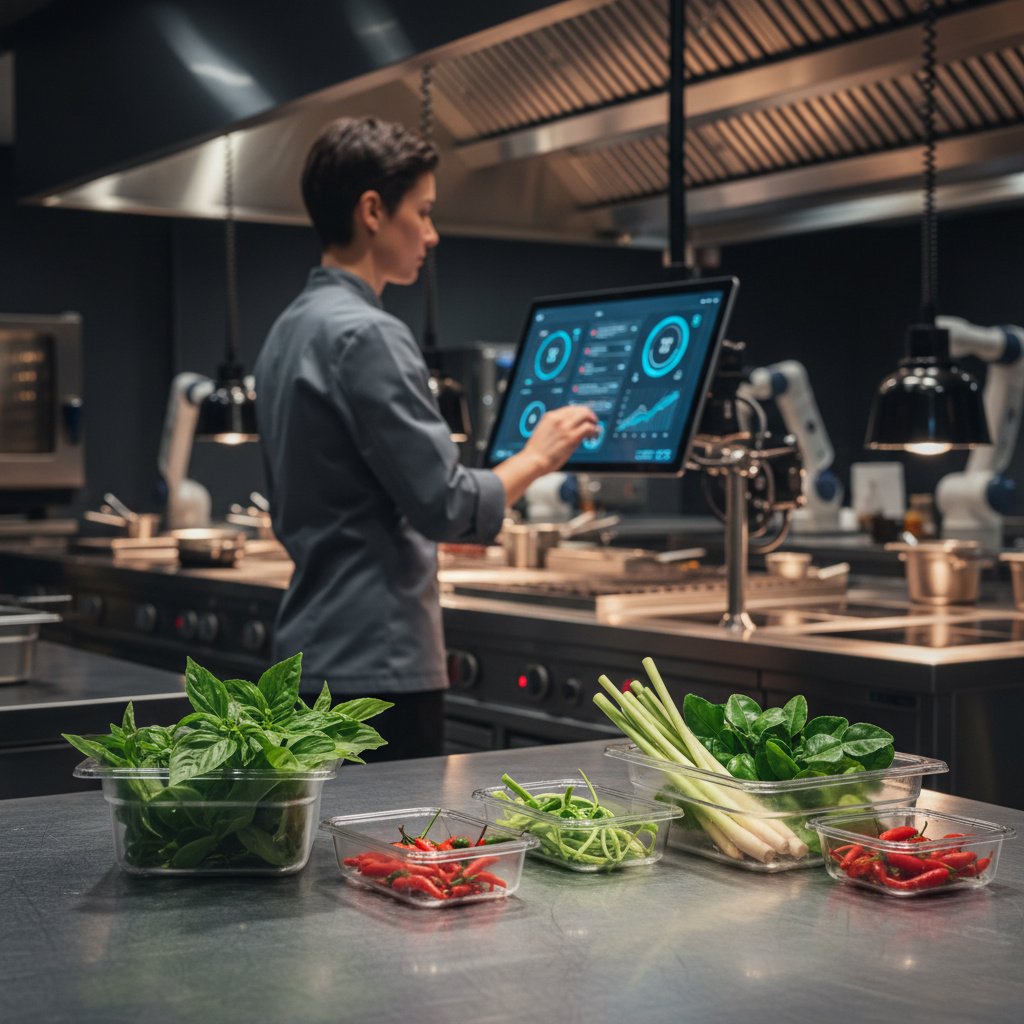
In military operations, supply chain visibility and logistics discipline determine mission readiness. In commercial hospitality, the battlefield shifts to kitchen margins, prep lines, and procurement cycles. For veteran business owners running high-volume foodservice operations, food waste is not an inevitable cost of doing business. It is an unforced tactical error—a recurring profit leak directly degrading operating margins and operational readiness.
Every kilogram of discarded product carries a compounded penalty: the original purchase price, the labor invested in receiving and prep, the refrigeration energy required to store it, and the commercial waste disposal fees incurred to haul it away. Capturing that lost value requires treating waste reduction not as a symbolic sustainability campaign, but as a systematic campaign of operational precision. Through restaurant waste reduction automation, veteran operators are combining data-driven inventory controls, automated demand forecasting, and disciplined back-of-house workflows to engineer high-margin sustainability and cost reduction.
The Hidden Cost of Friction: Understanding the Food Waste Deficit
Modern hospitality analytics reveal that typical restaurants lose between 4% and 10% of purchased inventory before it ever reaches a paying guest. Industry data estimates that individual locations generate between 25,000 and 75,000 kilograms of food waste annually, burning 2% to 4% of total top-line revenue. Across the United States, commercial kitchens discard tens of billions of pounds of food every year—the majority of which is perfectly edible before poor rotation, overproduction, or inaccurate forecasting spoils it.
For veteran entrepreneurs, these figures represent operational friction. Food waste generally falls into four distinct categories:
- Prep & Trim Loss: Inefficient butchery, aggressive peeling, or unstandardized knife work that discards usable yield.
- Overproduction & Batch Spoilage: Prepping large volumes of perishable bases or proteins based on guesswork rather than real-time consumption data.
- Inventory Expiration: Poor first-in, first-out (FIFO) rotation and unmonitored cooler storage leading to spoilage.
- Plate Waste: Misaligned portion sizes or uncalibrated side pairings that guests consistently leave uneaten.
Traditional manual logging—pen, paper, and end-of-shift clipboard estimates—consistently fails to capture the root causes of these losses. Kitchen crews working rapid-fire dinner rushes do not have the time or incentive to log half-pans of spoiled prep accurately. Without automated, real-time measurement, leadership manages blind.
The Automation Advantage: Connecting Procurement to POS
Automated waste reduction replaces subjective guesswork with real-time feedback loops. By integrating smart waste tracking platforms, automated procurement systems, and AI-driven demand forecasting with Point-of-Sale (POS) transactions, operators establish end-to-end inventory visibility.
Digital inventory and waste automation systems frequently deliver a 25% to 30% reduction in commercial food waste within the first quarter of deployment. These platforms deliver measurable ROI across several key operating pillars:
1. Dynamic Demand Forecasting
Static par sheets fail to account for weather shifts, local events, holiday patterns, or seasonal dining trends. AI-powered forecasting tools analyze historical POS sales velocity, upcoming reservations, and external variables to generate dynamic daily prep lists. Instead of prepping 40 pounds of protein on an educated hunch, the kitchen preps exactly what predictive data dictates, eliminating end-of-night overproduction.
2. Smart Waste Scales and Vision Systems
Mounted above organic waste bins, automated tracking terminals utilize computer vision, barcode scanning, or quick touchscreen interfaces to log discarded items in seconds. When a cook drops expired prep into the bin, the system records the ingredient, weight, time stamp, and financial cost. These data points roll up into clear shift summaries, pinpointing exactly where yield is lost.
3. Automated Reordering and Par-Level Calibration
Disconnected purchasing leads to emergency supplier runs or excessive bulk orders that rot on walk-in shelves. Automated inventory systems track depletion in real time based on menu-item sales and theoretical recipe deductions. When stock hits a verified reorder threshold, the software automatically creates vendor purchase orders calibrated to upcoming demand, preventing over-purchasing and preserving cash flow.
Case Study: Precision Prep in a High-Perishable Thai Restaurant
The operational mechanics of automated waste reduction are clearly demonstrated in specialized ethnic concepts, such as an authentic Thai restaurant. Thai culinary programs rely on highly perishable, aromatic ingredients and intricate prep chains. High-cost items—fresh Thai basil, kaffir lime leaves, bird’s eye chilies, lemongrass, fresh seafood, coconut milk, and scratch-made curry pastes—spoil rapidly if mismanaged.
Consider a Thai restaurant executing complex curry and wok stations. Under manual operations, cooks might prep 10-gallon batches of green and red curry bases every Monday. If mid-week covers drop, gallons of oxidized coconut-based curry are dumped by Thursday. Concurrently, unmonitored deliveries of fresh lime and herbs rot in humid coolers.
Deploying automated kitchen workflows transforms this dynamic:
- Batch Calibration: Demand forecasting software breaks batch production into dynamic micro-batches, directing the prep cook to execute smaller, targeted runs aligned with expected covers.
- Cross-Utilization Mapping: Recipe management software cross-references inventory across the menu. If fresh basil or lime supplies are high, the system prompts front-of-house staff to feature signature wok dishes or specialty beverages that rapidly deplete existing stock.
- Yield and Trim Auditing: Smart scale logs track protein trim during satay and curry prep, ensuring kitchen staff maintain target yield percentages per wholesale case.
By synchronizing inventory analytics with culinary execution, the operator protects authentic freshness and flavor while simultaneously slashing food costs by double digits.
Operationalizing Environmental Responsibility
For modern commercial enterprises, environmental responsibility is not a passive marketing talking point; it is a direct consequence of operational efficiency. Reducing kitchen waste yields immediate, measurable sustainability dividends:
- Landfill Diversion: Minimizes municipal tipping fees and cuts direct methane emissions generated by decomposing organic material in landfills.
- Reduced Embodied Carbon: Eliminates the wasted fuel, water, and agricultural resources embedded in food that is produced, shipped, but never consumed.
- Transparent Brand Equity: Provides verified sustainability metrics that resonate with mission-driven corporate clients, local diners, and eco-conscious talent looking for responsible employers.
Veteran business owners recognize that discipline breeds credibility. Transparent, data-backed waste reduction metrics allow brands to validate their green initiatives with hard numbers rather than vague claims.
Execution Framework: Phased Implementation for Veteran Operators
Adopting automated kitchen technology does not require overhauling operations overnight. Friction during technology deployments typically stems from over-complicated rollouts, inadequate crew training, or tool fatigue. A disciplined, phased implementation ensures sustained adoption and immediate payback:
Phase 1: Identify High-Value Friction Points
Conduct a 14-day baseline audit. Focus exclusively on top-tier cost drivers: high-value proteins, fresh produce, and high-volume batch sauces. Deploy automated scales or digital clipboards to measure loss in these three categories only. Establishing this baseline exposes the immediate financial recovery potential.
Phase 2: Integrate Waste Tracking with Recipe Management
Connect Point-of-Sale sales data to recipe costing software. Establish exact theoretical-versus-actual food cost variances. This integration highlights whether losses stem from over-portioning on the line, kitchen trim errors, or unrecorded spoilage in storage.
Phase 3: Implement Automated Reordering and Weekly Review Rituals
Transition manual order sheets to automated par-level triggers. Establish a mandatory 15-minute weekly waste review with shift leaders. Reviewing software-generated loss reports fosters accountability, highlights training opportunities for junior cooks, and reinforces a kitchen culture that values operational discipline.
The Strategic Takeaway
In high-stakes commercial kitchens, profitability is won or lost on the margins. Waste reduction automation bridges the gap between culinary craft and logistics excellence, transforming raw operational data into sustained margin expansion and verifiable environmental stewardship. For veteran entrepreneurs building scalable food enterprises, automated waste control is not merely a software upgrade—it is standard operating procedure for long-term operational dominance.











[…] businesses: Grants, tax breaks, and low-interest loans tailored for veteran businesses. […]
[…] platforms like Instagram and Facebook to create […]
[…] Examples of Workflow […]
[…] Automation tools collect and analyze data, giving you insights to make smarter choices. Google Analytics, for instance, tracks website…
[…] like LinkedIn and Instagram are powerful networking tools. Share valuable content, engage with industry leaders, and showcase […]