
The True Cost of Operational Friction
In military operations, supply chain visibility and logistics discipline determine mission readiness. In commercial hospitality, that same operational discipline directly dictates whether a restaurant survives on razor-thin margins or scales into a resilient, profitable enterprise. For veteran business owners, managing a commercial kitchen is fundamentally an exercise in operational control. Yet, one of the largest drains on bottom-line profitability remains hidden in plain sight: food waste.
Historically, commercial kitchens treated food waste as an unavoidable cost of doing business—an inevitable margin leak written off under generic operational overhead. Traditional clipboards, manual end-of-shift logs, and periodic garbage audits fail because they rely on tired staff to manually estimate losses during peak operational stress. The outcome is incomplete data, delayed decision-making, and recurring margin erosion.
Today, automated restaurant waste reduction technology is reshaping that dynamic. By pairing computer vision, connected smart scales, and deep POS integration, automated systems convert discarded ingredients from an invisible operational loss into precise, actionable intelligence. Rather than treating sustainability as an abstract marketing slogan, automation frames waste reduction as a high-impact strategy for cost reduction and margin defense.
How Waste Automation Captures Hidden Yield
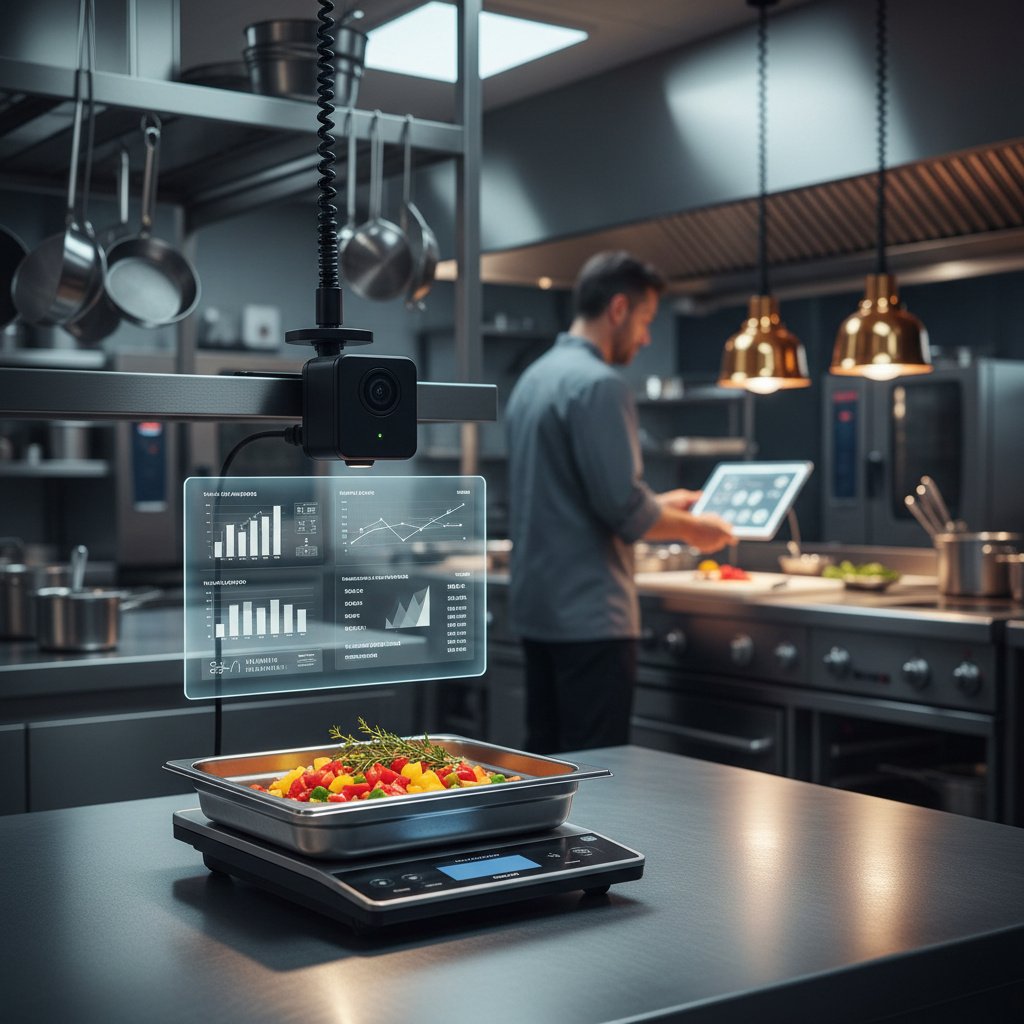
Modern automated food waste tracking operates unobtrusively within the rhythm of the line. High-resolution optical sensors and load-cell scales mount directly above disposal stations or prep lines. When kitchen staff discard trimmed prep, overproduced mise en place, or unconsumed plate returns, the system automatically captures an image, weighs the loss within fractions of a second, and identifies the exact item discarded.
This data feeds directly into real-time analytics platforms that cross-reference waste volumes against recipe-level usage, daily prep sheets, and live sales data from point-of-sale systems. Instead of receiving a vague end-of-month food cost report that shows cost of goods sold (COGS) running two points high, an operator receives immediate clarity across five critical vectors:
- Yield Loss: Inefficient trim practices during raw protein and produce fabrication.
- Overproduction: Excessive batch cooking that exceeds actual hourly demand.
- Inventory Spoilage: Ineffective first-in, first-out (FIFO) rotation or inaccurate ordering pars.
- Plate Waste: Customer-side leftovers that point to excessive portion sizing on specific menu items.
- Station Variance: Inconsistencies between different shifts, prep cooks, or kitchen stations.
The Perishability Challenge: A Complex Kitchen Case Study
Consider the operational dynamics of an authentic Thai restaurant. Menus anchored in Southeast Asian culinary traditions rely heavily on fragile, highly perishable inventory: fresh holy basil, kaffir lime leaves, lemongrass, fresh rice noodles, house-made curry pastes, and delicate seafood proteins. The mise en place requires daily, multi-station preparation with variable shelf lives.
In this type of high-velocity kitchen environment, a slight miscalculation in weekly pars or prep forecasts cascades into severe product loss. If fresh herbs or house-curried coconut bases are over-prepped ahead of an unexpected mid-week lull, entire batches spoil before the weekend surge. Conversely, if high-cost proteins are portioned without strict weight standardization across shifts, variance compounding over hundreds of covers erodes profitability rapidly.
When automated waste tracking is deployed in this context, the operator immediately sees where the friction lies. If the system flags that fifteen pounds of prepped noodles and four pounds of fresh herbs are discarded every Thursday night, the management team can immediately adjust Wednesday prep pars, cross-utilize ingredients across stir-fry and soup stations, or tighten supplier delivery schedules. Automated intelligence isolates the exact failure point, turning kitchen complexity into predictable execution.
Executing an Operational Playbook for Waste Reduction
For an experienced operator, implementing new kitchen technology requires a disciplined, phased approach. Friction occurs when teams attempt to overhaul every station simultaneously without establishing reliable baseline metrics. A structured deployment follows four strategic phases:
1. Establish the Baseline on High-Impact Stations
Avoid installing hardware across every bin on day one. Deploy automated units on the highest-velocity prep and disposal stations first—typically the central prep line or protein fabrication area. Run the tracking quietly for two to three weeks to establish an accurate baseline of daily discards without altering kitchen routines.
2. Integrate Kitchen Data with POS and Inventory Streams
Data silos undermine technology investments. Connect the waste automation dashboard directly with your POS system and inventory management software. This ensures that every ounce of discarded product is automatically valued against actual purchasing costs and reconciled against real-time sales mix.
3. Standardize Portions and Re-Engineer Recipes
Use the data to drive root-cause corrections. If post-consumer plate waste data shows consistent returns of side starches or specific garnishes, reduce the default portion size immediately. If prep waste data reveals high trim loss on whole produce, evaluate whether shifting to pre-cut items or retraining line staff on yield optimization yields a higher return on capital.
4. Institute Daily After-Action Reviews
Technology only delivers value when paired with operational accountability. Incorporate a two-minute waste metric review into daily shift huddles. When kitchen teams see the direct financial impact of their station’s precision, inventory handling transforms from a passive chore into a shared operational standard.
Aligning Environmental Responsibility with Margin Defense
Corporate sustainability initiatives often falter when they are treated as public relations exercises disconnected from economic realities. For veteran business owners, authentic environmental responsibility is built on operational stewardship—eliminating systemic inefficiency, conserving resources, and optimizing the life cycle of every dollar invested.
The financial return on investment from automated waste reduction is direct and measurable:
- Direct COGS Reduction: Most commercial kitchens experience a 2% to 6% reduction in overall food costs within the first six months of deployment by eliminating overproduction and spoilage.
- Optimized Working Capital: Smarter purchasing pars prevent cash from sitting idle in walk-in coolers tied up in perishable inventory that risks spoilage.
- Labor and Prep Efficiency: Kitchen staff spend less time prepping food that ultimately ends up in the dumpster, redirecting labor hours toward guest experience and quality control.
- Credible Brand Positioning: Customers and commercial partners increasingly favor businesses that demonstrate verifiable waste reduction. Backing sustainability claims with audited metrics provides an authentic competitive edge without resorting to hollow marketing.
The Strategic Takeaway
In competitive hospitality markets, operational success is not determined solely by topline revenue; it is defended through meticulous cost control, process optimization, and systems-driven leadership. Food waste is not an inevitable reality of kitchen operations—it is a measurable, manageable operating variance.
Deploying automated waste reduction technology provides operators with the visibility required to eliminate blind spots, protect margins, and build an enduring, sustainable enterprise. For leaders focused on building scalable, disciplined businesses, automating waste management is not a speculative tech upgrade—it is a proven management system that turns operational precision into lasting profitability.
Book a 15 minute discovery call to find out more today at https://digifidelis.com/calendar/











[…] businesses: Grants, tax breaks, and low-interest loans tailored for veteran businesses. […]
[…] platforms like Instagram and Facebook to create […]
[…] Examples of Workflow […]
[…] Automation tools collect and analyze data, giving you insights to make smarter choices. Google Analytics, for instance, tracks website…
[…] like LinkedIn and Instagram are powerful networking tools. Share valuable content, engage with industry leaders, and showcase […]