
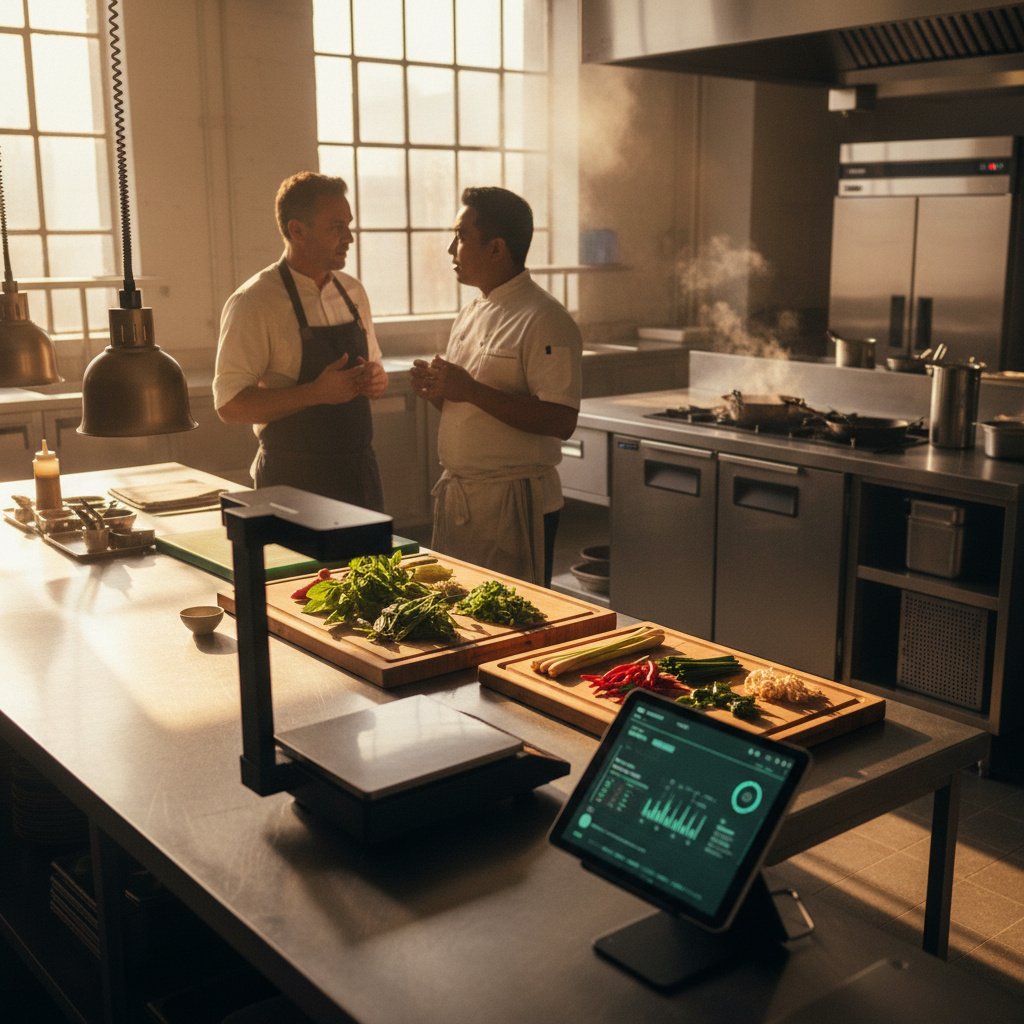
Every seasoned operator knows the quiet leak that drains a balance sheet. It rarely announces itself as a catastrophic equipment failure or an abrupt rent hike. Instead, it vanishes by the ounce: a third of a pan of coconut curry tossed at close, half a case of spoiled holy basil lost to improper cooler rotation, or prep trim discarded without a second glance. In hospitality, margin defense is won or lost in the margins between ordering and execution.
For veteran business owners who have spent decades navigating thin restaurant margins, the conventional conversation around “sustainability” often sounds detached from kitchen reality. Slogans do not pay supplier invoices. Yet a fundamental transformation is underway across commercial foodservice: restaurant waste reduction automation has crossed the line from a speculative public-relations initiative into a precise, mission-critical operational system. It reframes environmental responsibility not as an added expense, but as the inevitable byproduct of relentless operational discipline and cost reduction.
The Triple Threat: Food, Labor, and Decision Waste
Traditional kitchen management relies on clipboard logs, manual tare weights, and post-shift estimates. The flaw in this model is human friction. During the Friday night rush, no line cook stops service to weigh trimmed tenderloin or log discarded prep batches. When tracking demands extra steps, entries get skipped, numbers are guessed, and managers are left flying blind until month-end inventory reconciliations reveal unexpected losses.
Automated waste tracking directly addresses three systemic leaks that plague restaurant operations:
- Direct Food Loss: Raw ingredient spoilage, overproduction during prep, and post-consumer plate waste are captured at the point of disposal without operational disruption.
- Labor Inefficiency: Line cooks and sous chefs spend hours logging data, reconciling sheets, or second-guessing prep quantities. Automation captures events passively through integrated optical sensors, smart scales, and connected point-of-sale systems.
- Decision Latency: Manual records reveal what went wrong weeks after the loss occurred. Automated systems deliver actionable alerts in real time, converting scattered waste events into structured intelligence on item, weight, dollar impact, and root cause.
When you automate waste management, you eliminate the cognitive load on staff while giving leadership hard evidence rather than hunches.
Inside the Mechanics: From Sensors to Strategic Purchasing
Modern kitchen automation does not disrupt the flow of a working kitchen; it anchors into existing workflows. Today’s systems utilize unobtrusive hardware—such as computer-vision cameras mounted above waste stations, tare-calibrated scales beneath disposal units, and bi-directional inventory feeds. When an employee discards trim or an overprepped sauce, the unit automatically recognizes the food type, records the mass, calculates the precise cost of goods sold (COGS) lost, and tags the reason code.
Consider how this feedback loop transforms daily procurement. Rather than relying on static par sheets established six months ago, predictive inventory engines align real-time discard figures with shift patterns, weather forecasts, and historical covers. If prep waste for a signature protein spikes every Tuesday, the system flags the variance immediately. Management can immediately identify whether the driver is over-portioning on the line, poor knife skills at prep, or supplier yield variance.
This dynamic feedback loop links trash cans directly to the purchasing desk. When operators understand exact kitchen yields, they renegotiate supplier specs, shift batch sizing, and tighten ordering windows to ensure raw materials turn rapidly without rotting on walk-in shelves.
The Complex Kitchen Test: Why Thai Restaurant Operations Benefit Most
To grasp the true power of automated food tracking, examine the operational demands of high-SKU, fresh-ingredient concepts. A high-volume Thai restaurant provides an ideal case study in supply chain sensitivity and margin fragility.
Authentic Thai kitchens handle an exceptional variety of highly perishable aromatics, proteins, and daily batch preps: lemongrass, galangal, makrut lime leaves, fresh birds eye chilies, multiple curry pastes, and coconut milk bases. These ingredients possess notoriously short shelf lives. If kitchen forecasting overshoots weekend demand by even fifteen percent, dozens of quarts of fresh curry sauces and expensive seafood trim turn into outright write-offs by Monday afternoon.
Furthermore, complex menus frequently suffer from hidden plate waste. If an operator serving green curry consistently sees twenty percent of the accompanying rice and heavy vegetable garnish returned untouched, the system captures that trend. That data allows management to adjust standard portioning, redesign plate builds, and engineer the menu around items with genuine contribution margins rather than theoretical ones. For Thai restaurant operators, waste reduction automation protects the culinary integrity of delicate, fresh-forward dishes while systematically driving environmental responsibility through leaner, cleaner kitchen cycles.
Translating Data Into Action: The Operational Dashboard
A data dashboard is only as valuable as the decisions it prompts. Seasoned operators use automated reporting to dissect operational trends across five distinct lenses:
| Lens | Description |
|---|---|
| Loss by Item | Pinpoints specific recipes or raw ingredients that generate disproportionate dollar losses, signaling an urgent need for recipe reformulation, vendor spec adjustments, or smaller batch preps. |
| Loss by Shift | Isolates whether waste accumulates during early morning bulk prep, high-volume evening service, or late-night kitchen turnover, pinpointing exact coaching windows. |
| Loss by Station | Directs management focus toward specific kitchen stations—such as the sauté line, grill, or cold prep line—to identify broken equipment, hot-holding inefficiencies, or station-level bottlenecking. |
| Loss by Vendor | Tracks incoming ingredient quality over time. If a supplier’s produce spoils forty-eight hours faster than standard, purchase records supply immediate leverage for vendor credits or supplier switches. |
| Loss by Category | Distinguishes cleanly between prep waste (trim and production errors), spoilage (over-ordering or improper cooler rotation), and plate waste (portion sizing and customer dissatisfaction). |
The Disciplined Rollout: A Phased Implementation Plan
Veteran operators know that bringing new technology into an active kitchen without a clear implementation protocol invites failure. When systems are overly complex, staff circumvent them. The most successful deployments follow a disciplined, crawl-walk-run framework:
Phase 1: Baseline Audit (Days 1–14). Before installing hardware across every station, benchmark your baseline. Select your highest-volume prep station or most volatile ingredient category. Deploy a single connected scale or automated logging tool without imposing punitive staff mandates. Gather raw data to establish an accurate cost baseline.
Phase 2: Data Sanitation and Process Cleanup (Days 15–30). Analyze your baseline findings. Clean up inventory item masters, ensure standardized recipe cards match actual line builds, and review par levels. Technology will only magnify operational chaos if basic prep procedures lack consistency.
Phase 3: Culture and Crew Alignment (Days 30–45). Introduce the system to your kitchen staff as a labor-saving performance tool, never as an interrogation mechanism. High-performing culinary teams take pride in their craft; framing waste tracking as professional operational efficiency builds engagement and guarantees high compliance.
Phase 4: Full System Integration (Days 45+). Connect the waste platform directly into your POS sales mix and inventory management software. Automate reorder suggestions, establish real-time variance alerts, and reward shift leaders who hit measurable margin targets.
The True Bottom Line: Resilience and Environmental Responsibility
Vendor materials frequently tout eye-catching headlines, promising instant fifty-percent cuts in waste or immediate five-point drops in COGS. Seasoned business owners view marketing claims with healthy skepticism. The authentic financial return of waste automation depends entirely on execution: your menu complexity, initial baseline discipline, and management’s resolve to act on real-time insights.
Even modest, defensible gains—such as shaving two to four percentage points off your food cost—yield transformational bottom-line growth. For a restaurant generating $2 million in annual revenue, recovering three points of food cost puts $60,000 directly back into operating cash flow. In an economic environment defined by wage increases, erratic wholesale pricing, and volatile consumer demand, those recovered dollars provide operational staying power.
Simultaneously, cutting food waste achieves authentic environmental stewardship without relying on hollow corporate platitudes. Eliminating surplus food prevents preventable methane emissions at municipal landfills, lowers the carbon intensity of your cold storage, and respects the natural resources poured into agricultural production. For veteran business owners, automated waste reduction is neither an ideological luxury nor an administrative burden—it is the modern standard of operational excellence.











[…] businesses: Grants, tax breaks, and low-interest loans tailored for veteran businesses. […]
[…] platforms like Instagram and Facebook to create […]
[…] Examples of Workflow […]
[…] Automation tools collect and analyze data, giving you insights to make smarter choices. Google Analytics, for instance, tracks website…
[…] like LinkedIn and Instagram are powerful networking tools. Share valuable content, engage with industry leaders, and showcase […]