
The Battlefield of Unseen Kitchen Shrink
Every seasoned operator knows that battles are rarely won through grandiose gestures. They are won through logistics, supply-line integrity, and strict accountability. In the hospitality trenches, margin erosion doesn’t happen with a sudden collapse; it bleeds out a few ounces at a time across cutting boards, prep lines, and trash cans. For veteran business owners accustomed to operational discipline, food waste is not an inevitable cost of doing business. It is preventable friction, an operational vulnerability, and direct margin leakage.
Traditional kitchen wisdom relies on periodic, clipboard-based waste audits. A sous chef spends an afternoon logging prep trim, spoilage, and plate scrapes, produces a static spreadsheet, and files it away. Within forty-eight hours, the kitchen reverts to habitual over-prepping and estimated pars. restaurant waste reduction sustainability requires more than sporadic interventions; it demands a real-time, closed-loop operating system. This is where modern automation transforms kitchen operations, evolving waste management from a burdensome administrative chore into an automated command center that drives measurable cost reduction while fulfilling concrete environmental responsibility.
The Four-Layer Architecture of Automated Kitchen Control
Deploying automated waste management is fundamentally an exercise in standard operating procedures. Just as any high-reliability system relies on structured protocols, kitchen automation functions through four interconnected operational layers.
1. Frictionless Measurement at the Source
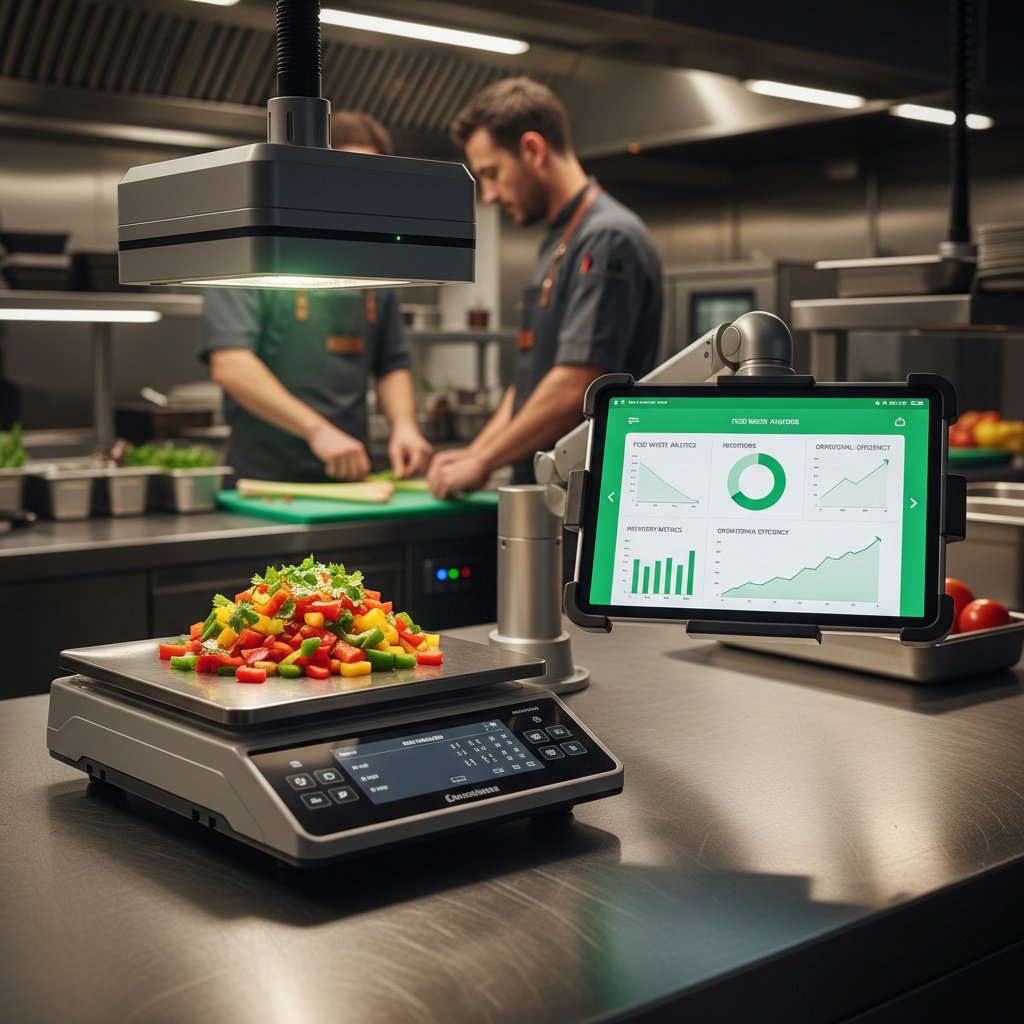
Measurement cannot slow down the line during a Friday night rush. Modern automated systems utilize computer-vision cameras mounted above waste receptacles, integrated with smart floor or bench scales. When a cook discards prep trimmings or burned pans, the system captures the weight, classifies the item via optical recognition, logs the timestamp, and assigns a dollar cost to the loss in less than two seconds. By removing manual data entry, kitchens capture authentic data without creating resistance among line staff.
2. Predictive Demand and Par Synchronization
Data without operational foresight merely creates an autopsy of lost profits. Connecting automated waste tracking directly into your point-of-sale (POS) and inventory platform bridges the gap between historical sales and actual plate consumption. The system identifies when your prep volume routinely outpaces real-world sales patterns, dynamically adjusting prep sheets and order recommendations. Instead of relying on a prep cook’s intuition, purchasing pars dynamically update based on seasonal variance, daypart trends, and actual yield ratios.
3. Real-Time Intervention and Menu Engineering
Once loss patterns surface, management can execute precise corrections. If high-dollar proteins consistently show up in plate waste logs, portioning standards require immediate review or recalibration. If delicate produce routinely spoils before use, batch ordering cadence must tighten. Armed with hard data, leadership can adjust recipe cards, retrain station cooks on knife yields, or re-engineer low-margin, high-spoilage menu offerings into lower-risk preparations.
4. Quantitative Verification
Every operational change requires verification against clear Key Performance Indicators. By tracking the delta between baseline food cost percentages and post-automation metrics, operators verify actual dollar savings. When teams see the cost-per-cover drop and disposal fees shrink, compliance shifts from forced adherence to collective mission ownership.
Case Study in Nuance: High-Volatility Menus and Thai Concepts
The strategic value of automation becomes unmistakably clear in ingredient-heavy, high-turn culinary models such as a Thai restaurant. The flavor profile of Thai cuisine hinges on fresh aromatics—lemongrass, galangal, kaffir lime leaves, Thai basil, and bird’s eye chilies—alongside rapid-cooking seafood, poultry, and coconut-based curries.
These delicate ingredients possess unforgiving shelf lives. Misreading weekend volume by even ten percent leads directly to limp herbs and spoiled seafood, forcing costly emergency distributor orders or direct dumpster disposal. Furthermore, Thai menus feature significant ingredient overlap across multiple wok and curry dishes. Without automated inventory tracking, it is nearly impossible for human observation to pinpoint whether excessive basil consumption stems from improper portioning in the Pad Krapow or over-prepping the green curry paste base.
Automated inventory intelligence tracks shared component consumption down to the gram. When the system detects rising trim waste on fresh aromatics or overproduction on pre-batched sauces, it flags the issue before spoilage forces an inventory write-off. The restaurant preserves authentic flavor profiles, maintains strict portion integrity, and avoids throwing margin into the compost bin.
Sustainability as Operational Efficiency, Not Public Relations
In consumer marketing, “green” initiatives often sound like superficial rhetoric. For a veteran-led enterprise, environmental responsibility is treated through the lens of stewardship and resource efficiency. Every pound of food routed into a municipal landfill represents wasted diesel, unnecessary packaging, wasted field labor, and increased commercial trash-hauling fees.
Preventing waste at the source is the single most cost-effective environmental action a restaurant can execute. Studies from the European Commission and leading foodservice analysts demonstrate that food waste reduction programs deliver remarkable returns, often returning multiples of the initial capital deployed within the first operational cycle. When kitchens automate portion discipline and eliminate overproduction, they systematically reduce their municipal disposal footprint, decrease cold storage energy loads, and generate clean, unadulterated food scraps suitable for municipal composting programs. Sustainability is not an unbudgeted overhead expense; it is the natural byproduct of operational precision.
The 30-Day Phased Deployment Protocol
Experienced leaders know that sweeping, wholesale operational overhauls often invite friction and failure. The most reliable path to operational integration is disciplined, phased execution.
Phase 1: Baseline and the Top 20 (Days 1–10)
Do not attempt to digitize every spice bottle on day one. Mount the smart capture station at the main prep and dish-clearing line. Calibrate your top 20 menu items by revenue and food cost footprint. Connect your POS data feeds and upload current distributor price sheets to establish baseline cost accuracy. Run the system in the background for ten days to establish true operational baselines without altering prep habits.
Phase 2: Station Ownership and Alert Calibration (Days 11–20)
Introduce the system to line supervisors and station leads not as surveillance, but as line-level support. Frame the automation as a tool designed to eliminate manual inventory counts and prevent prep shortages during peak service. Establish clear waste categories: prep trim, line expiration, burn/drop error, and customer plate waste. Set automated threshold alerts that notify shift managers when a station exceeds normal variance bands.
Phase 3: Par Adjustment and Menu Alignment (Days 21–30)
Review the first 20 days of hard capture data. Adjust distributor order quantities to reflect verified usage rates rather than legacy rules of thumb. Update kitchen prep sheets to reflect actual yield realities, and retrain line staff where recurring portion drift was documented. Measure the difference in food cost percentage against your pre-installation baseline to establish your ROI trajectory.
Technology Amplifies Leadership; It Does Not Replace It
A sophisticated camera and connected scale will never run a kitchen. Automation does not correct poor culinary technique, careless knife work, or disorganized walk-in coolers on its own. What automation provides is clear, indisputable visibility. It replaces guesswork, excuses, and end-of-month financial surprises with immediate, objective data.
For veteran entrepreneurs, this data-first clarity provides an operational edge. When you give dedicated kitchen crews the right visibility, clear standards of performance, and frictionless tools, operational discipline follows naturally. You safeguard your margins, eliminate unnecessary waste, and build an enduring business anchored in financial strength and environmental stewardship.











[…] businesses: Grants, tax breaks, and low-interest loans tailored for veteran businesses. […]
[…] platforms like Instagram and Facebook to create […]
[…] Examples of Workflow […]
[…] Automation tools collect and analyze data, giving you insights to make smarter choices. Google Analytics, for instance, tracks website…
[…] like LinkedIn and Instagram are powerful networking tools. Share valuable content, engage with industry leaders, and showcase […]