
Every military veteran who has led troops or managed supply lines understands a simple operational reality: friction and leakage bleed missions dry long before external threats arrive. When you transfer that disciplined mindset into commercial restaurant operations, food waste is not an inevitable cost of doing business. It is uncontrolled supply line leakage.
In the culinary sector, kitchen scrap has traditionally been treated as an acceptable casualty. Tossed vegetable trimmings, expired aromatics, burned sauces, and untouched plate portions quietly fill five-gallon bins throughout the day. By the time midnight trash runs take place, thousands of dollars in operating margin have walked straight out the back door into municipal dumpsters.
Today, restaurant waste reduction is moving away from manual clipboards, guesswork, and well-intentioned staff reminders. Through automated, computer-vision waste intelligence, veteran business owners are seizing complete operational control. By combining computer vision, automated scales, and inventory integrations, forward-thinking operators are turning unmeasured garbage into actionable cost reduction while establishing verifiable environmental responsibility.
The Visibility Gap: Turning Kitchen Chaos into Cold Data
Traditional kitchen management relies on manual spot-checks. A manager glances into trash bins, scolds prep cooks about peeling potatoes too deep, or tallies spoiled inventory during Sunday night reconciliation. But once service peaks, service tempo wins out. Nobody stops an eight-top ticket rush to write down four ounces of wasted protein on a paper log.
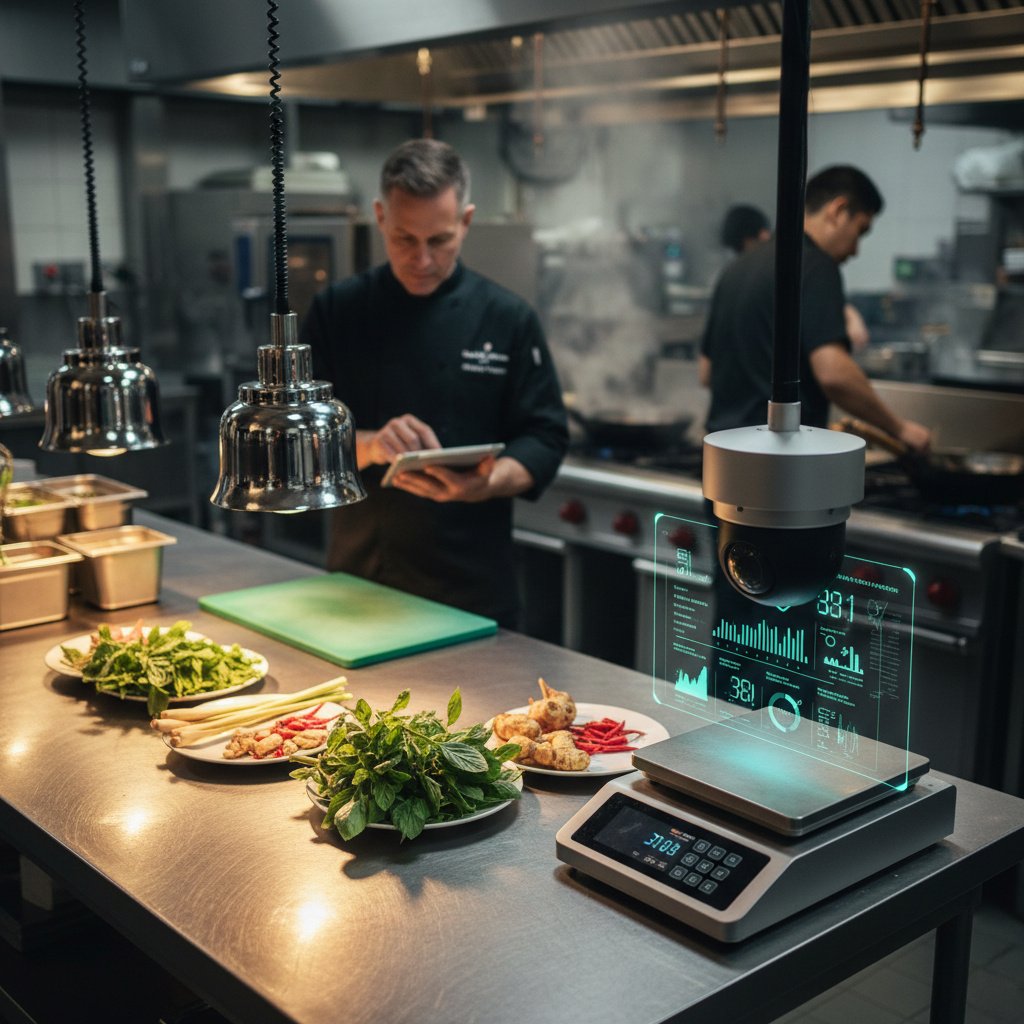
Restaurant waste reduction automation solves this fundamental human friction through passive capture. Advanced camera-and-scale setups mount directly above disposal stations and trash receptacles. When a line cook scrapes a cutting board or clears a prep pan, machine vision identifies the ingredient, registers the weight in fractions of a second, and logs the time stamp without interrupting the station cadence.
The system distinguishes overproduction from line trim, spoilage from prep errors, and excess portioning from plate return waste. In an instant, vague assumptions transform into cold, hard logistics data. When waste is tracked at that fidelity, you no longer run a restaurant on gut feeling; you run it on standard operating intelligence.
Defending the Thai Restaurant Supply Chain: Fragile Ingredients, Tight Margins
Consider the daily operational friction inside an authentic Thai restaurant. Thai cuisine is renowned globally for its complex symphony of salty, sour, sweet, and spicy notes. That gastronomic brilliance relies on volatile, highly perishable ingredients: fresh galangal, lemongrass stalks, kaffir lime leaves, fragile Thai holy basil, hand-pressed coconut milk, and tailored chili pastes.
These perishable aromatics carry brief shelf lives and delicate cold-chain requirements. When customer volume swings unexpectedly on a rainy Tuesday, or batch curries are over-prepped, authentic ingredients deteriorate quickly. In many independent kitchens, bulk prep is executed proactively to avoid getting crushed during lunch rushes. When that forecast misses the mark, costly fresh herbs wilt, delicate proteins oxidize, and scratch-made stocks get poured down the drain.
With waste automation installed at the prep and line stations, a Thai restaurant operator gains precise insight into consumption ratios. If the system flags that sixteen pounds of green curry base are systematically dumped every Thursday afternoon, the culinary team can calibrate yield down without sacrificing authenticity or service readiness. Automation protects the integrity of traditional cuisine while eliminating the margin erosion hidden behind fragile inventory.
The Direct Balance Sheet Impact: Real Cost Reduction
For any veteran entrepreneur evaluating operational capital, return on investment dictates the roadmap. The financial argument for restaurant waste reduction automation delivers immediate, quantifiable dividends.
Across commercial hospitality deployments, tracking systems regularly cut aggregate food waste by 30 to 50 percent within the first several months of active deployment. For commercial kitchens running standard 30-to-35 percent food costs, integrating waste metrics directly into Point of Sale (POS) and Enterprise Resource Planning (ERP) databases commonly shaves 2 to 4 full percentage points off baseline food cost percentages.
In a restaurant generating $1.5 million in gross annual sales, dropping food cost by three points returns $45,000 directly back to your bottom line. That is pure net profit recovered from waste receptacles, amortizing the upfront hardware and subscription costs in a matter of months. When you control margin leakage at the disposal point, your purchasing leverage compounds across every single distributor invoice.
Authentic Environmental Responsibility: Measurable, Not Performative
Modern consumers, particularly younger demographics who frequent casual and upscale dining concepts, demand authentic corporate stewardship. They see through empty greenwashing slogans and surface-level marketing claims. They respect transparent, documented environmental responsibility.
Decomposing food in municipal landfills generates massive volumes of methane, a greenhouse gas significantly more potent than carbon dioxide. When an establishment prevents hundreds of pounds of food from hitting the landfill each week, it directly lowers upstream agricultural resource consumption, fuel burn in cold transit, and downstream waste processing emissions.
Because automated waste platforms capture verified data, veteran business owners can communicate real, verifiable impact. Publishing certified waste reduction metrics—showing your dining room diverted five tons of organic waste and reduced municipal hauling tonnage—builds fierce customer loyalty. It demonstrates that your operation leads with the same values of stewardship, honor, and accountability that guided your military service.
The 5-Step Execution Plan for Veteran Operators
A mission succeeds through disciplined planning and phased execution. Transitioning your kitchen into a data-driven, low-waste operating environment follows a proven five-step protocol:
1. Establish the Baseline
Before implementing automated intervention, audit your existing baseline. Run clear trash bags, conduct brief manual tallies, or record overall food-waste-to-sales ratios for two weeks. You cannot calculate tactical victory without knowing your starting coordinates.
2. Deploy Frictionless Capture at High-Loss Friction Points
Position automated vision-and-scale tracking units at the primary prep stations and dish sculleries where high-value proteins, fresh produce, and high-labor sauces are processed. Ensure the capture hardware requires zero extra manual keystrokes from line staff to preserve throughput speed.
3. Integrate POS, Inventory, and Kitchen Workflows
Siloed data is useless data. Synchronize your automated tracking outputs with your inventory software and POS terminals. Aligning discard timestamps against sales velocity reveals whether excess waste stems from over-portioning during rushes or inaccurate morning batch forecasting.
4. Conduct Weekly After-Action Reviews (AAR)
Treat your weekly management brief like a military after-action review. Pull the top five waste items from the automated dashboard. Sit down with your kitchen leads, identify the root causes—vendor package size, line execution, or par level bloat—and assign clear operational adjustments for the upcoming cycle.
5. Lock In Systemic Operating Discipline
Technology alone does not maintain performance; sustained leadership does. Keep automated tracking permanent rather than viewing it as a temporary audit. When culinary teams recognize that waste visibility is an unyielding operational standard, personal ownership spreads through the prep line, making waste elimination a permanent company habit.
Margin Victory Through Systemic Control
Running a successful hospitality concept demands the same tactical grit, logistical clarity, and resource stewardship found in military operations. When waste is unmeasured, profits evaporate unchecked. But when you deploy smart automation, you remove human friction, optimize complex prep routines, and defend hard-won operational margins.
By leveraging automated restaurant waste reduction, veteran owners secure a decisive commercial edge. You preserve culinary excellence, strengthen community trust through genuine sustainability, and ensure that every pound of food purchased drives mission success.
Book a 15 minute discovery call to find out more today at https://digifidelis.com/calendar/











[…] businesses: Grants, tax breaks, and low-interest loans tailored for veteran businesses. […]
[…] platforms like Instagram and Facebook to create […]
[…] Examples of Workflow […]
[…] Automation tools collect and analyze data, giving you insights to make smarter choices. Google Analytics, for instance, tracks website…
[…] like LinkedIn and Instagram are powerful networking tools. Share valuable content, engage with industry leaders, and showcase […]