
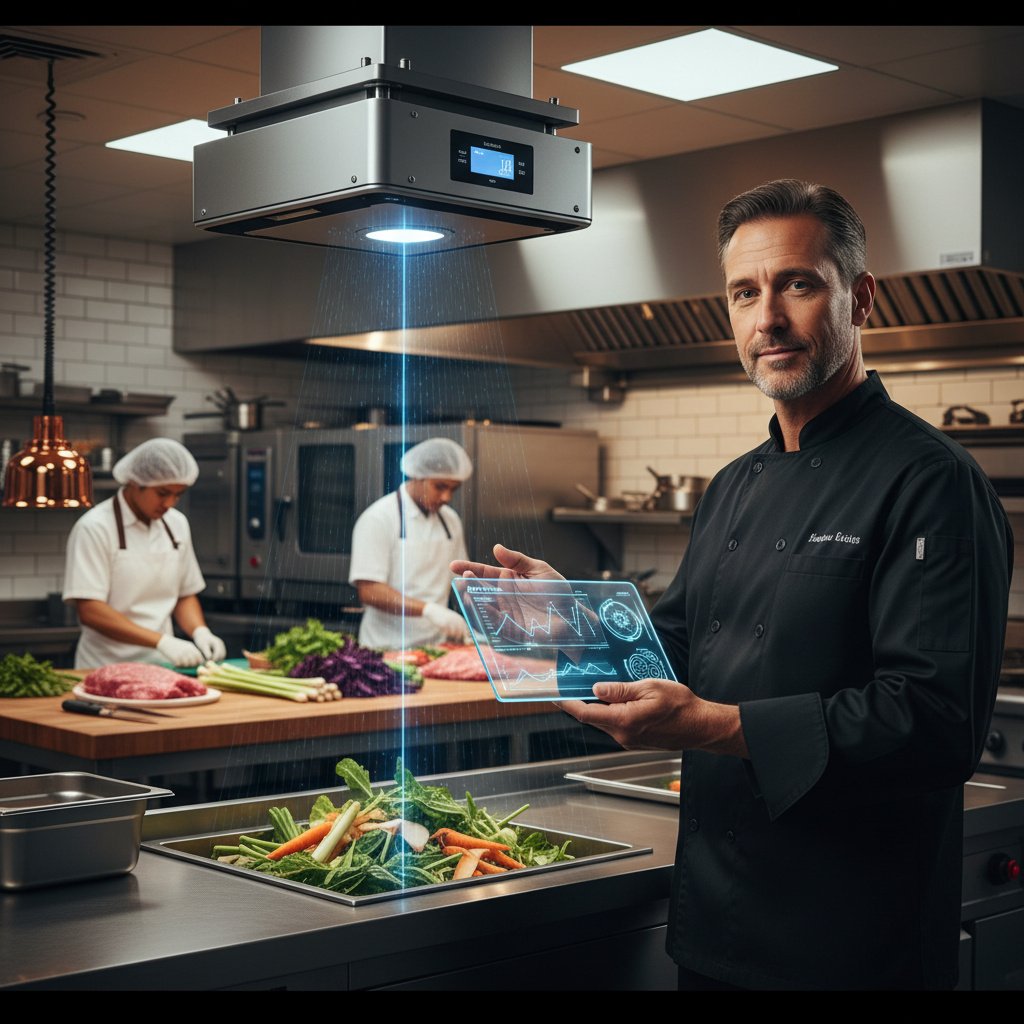
Every seasoned operator understands the brutal math of commercial kitchens. You design a menu, dial in portions, negotiate distributor pricing, and demand disciplined prep standards. Yet between receiving dock deliveries and the dishwashing station, inventory slips away silently. It exits your back door in trash bins, taking your operating margin with it.
For veteran business owners, unmeasured waste is an operational blind spot. Traditional clipboard sheets and manual clipboards rarely capture reality. Prep cooks under time pressure skip logging, shift leads make subjective guesses, and spoilage gets written off as unavoidable slippage. When food costs drift upward, managers scramble to raise prices or squeeze vendor contracts, ignoring the most immediate control point inside their four walls.
Automated restaurant waste reduction reframes this challenge entirely. By replacing manual paperwork with automated capture, connected scales, and real-time inventory synchronization, automation converts food loss from a hidden, recurring bleed into an actionable management discipline. It transforms environmental responsibility into direct cost reduction and margin defense.
The Hidden Drag on Food Cost Percentages
In standard food service operations, raw ingredient purchases represent 28 to 35 percent of top-line revenue. Industry analyses show that 4 to 10 percent of all food brought into a commercial kitchen is discarded before it ever reaches a paying guest. When margins hover in single digits, losing even 4 percent of inventory to overproduction, trimming errors, or expiration directly threatens business resilience.
Traditional accounting treats kitchen waste as an aggregated cost of goods sold. When fifty pounds of prep scraps disappear across six shifts, the profit-and-loss statement shows elevated food costs, but offers zero tactical intelligence on where the leak occurred. Was it over-ordering? Sloppy knife work during morning prep? Over-portioning during a Friday rush? Or did a batch of delicate produce spoil in walk-in storage?
Manual waste logs fail because they require kitchen teams to stop production during peak operational tempo to manually record their own errors. Automation eliminates that friction by automating the audit trail. When waste metrics are tied to cold data rather than memory or blame, operators gain the factual foundation needed to execute disciplined operational adjustments.
The Three Pillars: Prevention, Visibility, and Accountability
Modern waste management platforms function as integrated control systems built on three distinct layers of operational leverage:
1. Algorithmic Prevention
The most cost-effective scrap is the one you never purchase or over-prep. Automated platforms integrate directly with point-of-sale (POS) data and historical sales patterns to generate predictive prep lists. Rather than relying on a cook’s rule of thumb, automated forecasting accounts for daypart trends, reservation volume, and seasonal sales mix, keeping par levels calibrated to verified demand.
2. Granular Station Visibility
Modern hardware setups deploy automated computer-vision cameras and connected smart scales mounted above disposal bins. As staff scrap trim or discard overproduced batches, optical recognition identifies the item, records its exact weight, and timestamps the entry in milliseconds without requiring manual keypad entry. Instead of generic waste volume, the operator sees that twenty pounds of prep loss came specifically from beef tenderloin trim at Station 2 between 9:00 AM and 11:30 AM.
3. Real-Time Management Accountability
Data without daily feedback accomplishes nothing. Automation engines translate captured grams and pounds into actual dollar values and push automated shift summaries directly to executive chefs and general managers. When kitchen leadership can see daily waste variance benchmarked against live revenue, coaching shifts from subjective friction to objective execution.
The Operational ROI: Dollars Over Platitudes
Veteran operators demand clear return on capital. Sustainability slogans do not service debt or pay payroll. Fortunately, the business case for restaurant waste reduction automation is anchored squarely in cash flow fundamentals.
Operational data across commercial implementations shows that kitchens adopting automated waste tracking consistently reduce food costs by 2 to 4 percentage points within three to six months. On an operation generating $2 million in annual revenue with an initial 32 percent food cost, cutting food waste by just 3 percentage points drops $60,000 directly to the bottom line.
Furthermore, independent research across the food service sector reports an average return of $7 to $14 in bottom-line savings for every single dollar invested in waste prevention programs. The return velocity is swift because waste automation targets immediate controllable losses: batch over-prepping, unchecked expiration dates, and improper yields. Unlike costly marketing initiatives with unpredictable outcomes, internal waste recovery represents cash already inside the building that you simply stop discarding.
Field Execution: Lessons from High-Complexity Kitchens
To understand where automated tracking delivers the highest leverage, consider complex culinary operations such as an authentic Thai restaurant. Thai kitchens balance dozens of volatile, high-value aromatics, delicate herbs, fresh chilies, specialty proteins, house-made curry pastes, and scratch broths.
In a high-volume Thai restaurant, fresh Thai basil, lemongrass, kaffir lime leaves, and galangal carry high wholesale price tags and narrow shelf lives. If kitchen teams prep curry bases or marinade proteins based on intuition rather than automated batch forecasting, slight demand dips cause expensive spoilage within 48 hours. Similarly, high-frequency wok stations require tight ingredient staging; an unchecked half-ounce protein overage across 400 daily pad thai orders quietly burns through thousands of dollars in monthly margin.
Automated stations identify these micro-losses immediately. When tracking shows recurring waste in specific scratch sauces or over-prepped noodles on Tuesday evenings, prep schedules can be recalculated instantly. Batch sizes contract, raw ingredient turnover accelerates, and fresh components hit plates at peak culinary quality with minimal waste.
Execution Roadmap: Phased Rollout for Veteran Operators
Introducing new systems into active kitchen environments requires a disciplined, low-friction deployment strategy. Seasoned operators avoid sweeping, disruptive overhauls in favor of staged rollouts.
- Phase 1: Establish the Baseline. Run smart scales and optical trackers for two weeks at a single high-impact station—such as the morning prep line or primary protein station—without altering current kitchen routines. The objective is capturing an unvarnished benchmark of baseline waste.
- Phase 2: Integrate Core Data Feeds. Connect the waste platform with your existing POS and digital inventory management systems. This link enables the software to correlate waste events against real-time sales and theoretical usage, exposing discrepancies between purchased stock and sold menu items.
- Phase 3: Train Shift Leaders on Metrics. Empower sous chefs and station leads with simple dashboard views. Focus on a single critical KPI: food cost variance per station. When cooks understand that the system monitors kitchen efficiency rather than assigning personal fault, operational buy-in solidifies.
- Phase 4: Iterate Prep Schedules and Par Levels. Use captured loss data to fine-tune ordering cycles, contract prep batch sizes, and adjust menu item trim specifications.
Overcoming Common Operational Objections
Pragmatic owners often ask: Isn’t hardware expensive? Will cooks push back? What if the software is too complicated?
First, modern platforms offer flexible deployment architectures. If capital-intensive optical imaging systems exceed current budgets, operators can deploy software-only tools that leverage standard tablets and connected digital scales. Second, automated hands-free systems eliminate cook resistance because they do not interrupt kitchen flow with manual data entry. Kitchen staff spend less time logging paperwork and more time producing food.
Third, modern waste analytics interface seamlessly with existing restaurant management stacks. They do not require a separate operational silo; they feed actionable variance alerts directly into the inventory workflows your team already uses.
Sustainability as Operational Resilience
Environmental responsibility is no longer just a marketing talking point; it is a marker of operational discipline. Every pound of food scrapped in a commercial kitchen represents wasted upstream energy, agricultural water, transportation fuel, and paid kitchen labor. When that food rots in landfills, it generates methane, driving regulatory scrutiny and shifting consumer preferences.
Today’s guests, municipal regulators, and institutional lenders favor businesses that demonstrate measurable resource stewardship. By capturing food waste through automated verification, veteran operators gain audit-ready proof of their operational efficiency and environmental stewardship. You satisfy rising consumer demand for sustainability while locking in lower operating costs.
Automated waste reduction bridges the false divide between environmental responsibility and commercial profit. By deploying automated visibility, rigorous station accountability, and algorithmic forecasting, veteran restaurant owners protect their margins, eliminate kitchen blind spots, and run operations built for long-term endurance.
Book a 15 minute discovery call to find out more today at https://digifidelis.com/calendar/











[…] businesses: Grants, tax breaks, and low-interest loans tailored for veteran businesses. […]
[…] platforms like Instagram and Facebook to create […]
[…] Examples of Workflow […]
[…] Automation tools collect and analyze data, giving you insights to make smarter choices. Google Analytics, for instance, tracks website…
[…] like LinkedIn and Instagram are powerful networking tools. Share valuable content, engage with industry leaders, and showcase […]