
The Operational Discipline of Margin Protection
In military operations, logistics dictates destiny. Ammunition, fuel, and rations are calculated down to the ounce because waste on the front line directly compromises mission capability. Running a commercial kitchen demands the exact same rigor. For veteran business owners, profitability isn’t driven by flashy marketing or temporary trends—it is secured through tight operating procedures, relentless inventory discipline, and rigorous cost control.
Food waste is an invisible hemorrhage on your profit and loss statement. Traditional back-of-house operations treat discarded prep, spoiled ingredients, and unconsumed portions as an inevitable cost of doing business. However, viewing waste as a routine operational loss is a strategic mistake. According to data from the National Restaurant Association, restaurants that actively track waste can slash their total food costs by 2% to 6%. For multi-site operators implementing standardized audits and automated portion controls, overall waste reduction often reaches between 20% and 30%.
Achieving these numbers requires moving past manual logbooks and guesswork. Modern restaurant waste reduction automation transforms raw kitchen disposal into actionable operational intelligence. By integrating real-time waste tracking into your existing Point of Sale (POS) and inventory infrastructure, you establish a system of accountability that protects your margins while reinforcing environmental responsibility.
Beyond the Trash Can: How Waste Automation Actually Works
Waste automation is not an overhyped gadget or a gimmick; it is an integrated operational stack designed to eliminate blind spots in your kitchen. The core setup consists of three primary components working in unison: automated measurement hardware, seamless POS integration, and predictive inventory analytics.
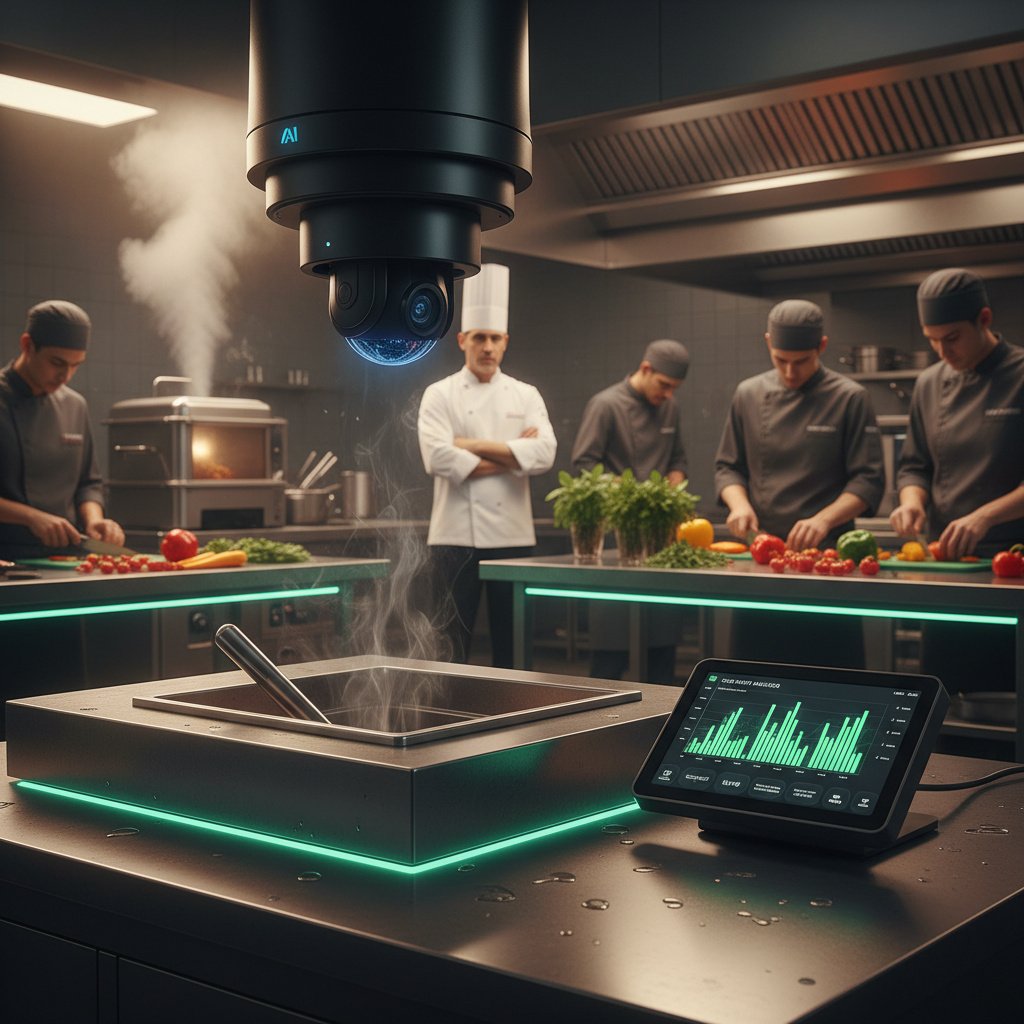
The hardware typically includes smart scales positioned at prep stations, the pass, and dish return areas, alongside AI-assisted camera units mounted directly above disposal bins. As kitchen staff discard prep trimmings, expired ingredients, or untouched plate waste, the overhead camera captures visual data while the scale records exact weight. Within seconds, image-recognition algorithms identify the ingredient—whether it is trim from beef tenderloin or surplus prepped vegetables—and log its exact weight and monetary value.
The true power of this system emerges when hardware feeds data directly into your inventory software and POS platform. Instead of looking at end-of-month inventory spreadsheets to discover why food costs spiked, automation provides immediate visibility into your actual-versus-theoretical (AvT) variance. AvT variance measures the gap between the ingredients your recipe models say you should have used based on sales, and what was actually consumed from your pantry. When that gap widens, automated dashboards pinpoint the precise menu items, prep shifts, or workstations causing the bleed.
Targeting the Three Pillars of Kitchen Loss
To eliminate waste effectively, automation targets three distinct operational pain points: overproduction, spoilage, and portion variance.
1. Overproduction Prevention
Kitchens routinely over-prep out of fear of running out during peak rushes. AI-driven forecasting engines analyze historical sales data, weather forecasts, foot-traffic trends, and daypart patterns to generate precise daily prep sheets. By aligning prep volumes strictly with anticipated demand, managers prevent excessive batch cooking before service even begins.
2. Spoilage and FIFO Enforcement
Ingredients lying forgotten in the walk-in cooler represent pure profit degradation. Automated inventory platforms track shelf-life metrics and enforce strict First-In, First-Out (FIFO) procedures. Reorder alerts trigger based on real-time consumption rates rather than static par levels, cutting storage losses and expiration rates significantly.
3. Portion Control and Plate Waste Analysis
When dishwashers scrape left-over food off returned plates, that waste points directly to menu engineering issues. If smart disposal stations consistently register half-eaten starch side dishes or oversized garnishes, operators receive automated alerts. Adjusting portion sizes down to match actual consumption saves raw material costs without lowering guest satisfaction.
Specific High-Variance Application: The Thai Kitchen Model
To understand how waste automation delivers financial and environmental returns in a complex culinary environment, consider the dynamics of a high-volume Thai restaurant. Thai cuisine relies heavily on fresh, highly perishable ingredients—such as Thai basil, lemongrass, kaffir lime leaves, fresh galangal, and delicate seafood. Furthermore, many signature bases, including curries, peanut sauces, and broth reductions, require labor-intensive batch preparation.
Without precise tracking, fresh herbs spoil rapidly in cold storage, and overproduced batches of green curry must be discarded at the end of the shift due to quality degradation. When a Thai restaurant integrates automated waste reduction technology, several immediate improvements occur:
- Herb and Produce Optimization: Smart scales monitor delicate produce prep, revealing exact yield percentages from raw ingredient to usable mise en place, encouraging better knife skills and prep discipline.
- Curry and Sauce Batch Calibration: Predictive analytics refine batch-cooking schedules based on day-of-the-week sales velocity, ensuring kitchen teams prepare just enough base to meet demand while preserving fresh flavor standards.
- Seafood Spoilage Reduction: Automated inventory tracking highlights shelf-life thresholds for high-cost proteins like shrimp and squid, prompting kitchen managers to run targeted daily specials before inventory expires.
By controlling ingredient loss in a complex, fresh-focused environment like a Thai kitchen, operators safeguard high-cost ingredients while maintaining authentic quality standards. The exact same operational principles translate directly to steakhouses, Italian trattorias, or multi-unit fast-casual franchises.
Leadership and Culture: Managing the Human Factor
Technology alone will not transform your P&L. Software provides visibility, but human leadership drives execution. Veteran business owners know that introducing new technology without team buy-in leads to friction, missed inputs, and abandoned systems.
When rolling out waste automation, frame the technology as a supportive tool that makes kitchen jobs easier, not as a micromanagement surveillance system. Successful deployment relies on simple, disciplined leadership habits:
- Appoint Food Waste Champions: Designate a trusted lead line cook or sous chef on each shift to oversee disposal station compliance and monitor system calibration.
- Build Waste Audits into Onboarding: Train every new culinary hire on waste minimization, portion standards, and system operation during their first week.
- Reward Operational Metrics: Align kitchen team incentives with waste-reduction goals. Share monthly savings directly with the team through performance bonuses or shift rewards when food cost targets are hit.
- Focus on Coaching Over Penalty: Use variance reports as diagnostic coaching tools. If a cook consistently over-preps a specific item, review their technique and adjust daily prep sheets together.
Sustainability as a Commercial Asset
While cost reduction provides the primary financial justification, environmental responsibility serves as a powerful secondary advantage. Consumers increasingly favor businesses that demonstrate authentic sustainability over empty marketing claims.
Commercial food waste sending methane into landfills represents an avoidable environmental burden. Automated tracking generates concrete data showing exact tonnage diverted from municipal waste streams. Restaurant owners can leverage these verified metrics to strengthen brand reputation, fulfill municipal green compliance requirements, and streamline surplus food donation programs with local food banks.
When you reduce waste through operational automation, sustainability ceases to be an added expense—it becomes a direct byproduct of sound business management.
A Step-by-Step Implementation Roadmap
Rolling out an automated waste reduction system should follow an orderly, phased execution plan:
Step 1: Baseline Audit
Conduct a two-week baseline assessment of your current trash and trim output without changing existing procedures. Establish your baseline food waste cost as a percentage of total food sales.
Step 2: Hardware and Software Setup
Install smart scales and camera stations at high-volume prep areas and dish scrap stations. Integrate the hardware with your inventory software and POS database.
Step 3: System Calibration & Staff Briefing
Allow 3 to 5 days for the AI visual recognition systems to calibrate to your menu items. Conduct brief, practical hands-on training sessions with line cooks and prep staff.
Step 4: Weekly Review & Operational Adjustments
Review top-variance items weekly. Focus initial efforts on the top 5 highest-value wasted ingredients. Adjust par levels, prep sheets, and ordering schedules based on hard data.
By approaching waste reduction as an operational discipline, veteran business owners turn a legacy kitchen liability into a sustainable source of bottom-line profit.











[…] businesses: Grants, tax breaks, and low-interest loans tailored for veteran businesses. […]
[…] platforms like Instagram and Facebook to create […]
[…] Examples of Workflow […]
[…] Automation tools collect and analyze data, giving you insights to make smarter choices. Google Analytics, for instance, tracks website…
[…] like LinkedIn and Instagram are powerful networking tools. Share valuable content, engage with industry leaders, and showcase […]