

The Transition Battlefield: Why Veteran Business Succession Demands Military Precision
Every military leader understands a fundamental truth: a command structure that collapses when the commander steps away is not a success; it is a single point of failure. In the military, you train your replacement from day one. You build operational redundancies, establish clear chains of command, and ensure the mission continues regardless of individual absence. Yet, when transitioning to the civilian entrepreneurship arena, many veteran business owners leave their final and most critical operation—business succession—entirely to chance.
Building a successful enterprise takes years of grit, discipline, and tactical foresight. Whether you forged a defense contracting firm, a multi-state logistics enterprise, or a thriving family trade business, your company is more than a commercial asset. It represents your sweat equity, your personal values, and a physical continuation of your service. However, without a deliberate, strategically executed plan for business succession, veteran business owners risk losing control over the future of the companies they fought so hard to build.
True legacy planning goes far beyond standard retirement. It protects your enterprise against unexpected crises, guarantees financial stability for your military family business, and secures the jobs of the team who trusted your leadership. Succession is not an emergency exit strategy; it is a calculated operational transfer executed on your terms, at peak valuation, and with zero disruption to the overarching mission.
Understanding the Three Core Pathways of Business Transfer
Executing a successful business transfer begins with identifying the right destination. There is no one-size-fits-all roadmap for a veteran business owner; the chosen pathway depends on your financial goals, leadership development, and long-term legacy vision. Generally, succession falls into three primary strategic categories.
1. Family Succession: Building a Multigenerational Enterprise
Passing ownership and executive command to a child, spouse, or family member remains one of the most fulfilling exit strategies for a veteran entrepreneur. It keeps the business within the family fold and builds intergenerational wealth. However, family succession is often the most emotionally complex path. Bridging the gap between family dynamics and business management requires objective assessment. A military family business must evaluate whether the successor possesses genuine leadership capability and industry competence, rather than relying solely on bloodline. Intentional preparation, paired with clear governance structures, protects both the company’s balance sheet and Sunday dinner.
2. Internal Management Transition: Rewarding Key Leaders
If family members are unavailable or uninterested, your next operational move is looking inward. Key executives, senior managers, or high-performing veterans within your ranks already understand your company culture, operations, and client expectations. Internal transitions—whether structured through a management buyout or an Employee Stock Ownership Plan (ESOP)—allow you to transfer power gradually. This path preserves operational continuity and rewards the loyal team members who helped build the business, ensuring the tactical knowledge remains firmly within the organization.
3. Third-Party Sale: Capitalizing on Peak Market Value
For many veteran business owners, selling to an outside buyer, private equity group, or strategic competitor offers the highest liquidity and financial return. A third-party sale allows you to capture the full market value generated over decades of hard work. However, this path demands rigorous preparation. External buyers conduct exhaustive due diligence, scrutinizing balance sheets, contract terms, client retention rates, and risk profiles. Preparing for an external business transfer requires getting your financial house in order years before hanging up the “for sale” sign.
The Foundations of Transferable Value: Valuation and Operational Autonomy
A business that relies entirely on the founder’s daily presence and personal client relationships is not a transferable business; it is a job with high liability. To achieve a premium valuation, a veteran business must build operational autonomy. Buyers and successors do not just purchase current revenue—they buy future cash flows and predictable, repeatable systems.
Professional business valuation is the foundational step in any succession strategy. Guessing the worth of your company based on top-line revenue or gut feeling is a tactical error. A formal valuation establishes a realistic baseline and identifies critical value drivers, including:
- Systemized Standard Operating Procedures (SOPs): Documented workflows that allow the business to operate seamlessly without founder intervention.
- Diversified Revenue Streams: Low customer concentration, ensuring no single client accounts for more than ten to fifteen percent of overall income.
- Recurring Contractual Income: Multi-year service contracts and subscription models that guarantee predictable cash flow post-transfer.
- A Strong Second Tier of Command: A capable management team trained to lead operations, sales, and strategy independently.
Consider the story of a veteran-owned logistics firm in Texas. The founder, a former Army logistics officer, built a $12 million enterprise through personal relationships and sheer effort. Yet, when he approached a business broker, he discovered his company was valued far lower than expected because every vendor contract and client relationship lived in his head. Over the next three years, he implemented rigorous SOPs, delegated client account management, and secured multi-year enterprise contracts. That operational shift doubled the company’s valuation and allowed for an effortless transition to an internal leadership team.
Legal, Estate, and Tax Alignment: Protecting the Mission and the Family
A business transfer cannot occur in a vacuum. It sits directly at the intersection of business law, tax strategy, and personal estate planning. Far too many business owners design an operational transition plan but fail to align it with their personal legal estate structure, leaving their families vulnerable to probate delays, heavy estate taxes, and legal disputes during sudden life events.
For a veteran business owner, comprehensive estate planning goes well beyond a basic will. A robust legal framework requires integrated instruments designed for business continuity:
Revocable Living Trusts & Entity Structuring: Holding business shares within a properly structured trust ensures that if an owner passes away or becomes incapacitated, ownership transfers seamlessly without freezing corporate accounts or forcing the company into probate court.
Cross-Purchase or Entity-Purchase Buy-Sell Agreements: A buy-sell agreement acts as a legal prenuptial agreement for business partners or key stakeholders. Funded by life or disability insurance, a buy-sell agreement dictates exactly what happens to business equity upon death, permanent disability, or retirement, preventing outside parties or unprepared heirs from inheriting voting control.
Powers of Attorney and Healthcare Directives: Clear designation of financial durable power of attorney guarantees that payroll can be met, vendor checks signed, and operational decisions rendered if the founder is temporarily sidelined by health issues.
The Five-Phase Succession Roadmap for Veteran Business Owners
Succession is not a single transaction executed on a Friday afternoon; it is a multi-year tactical campaign. Just as military operations follow structured phases from intelligence gathering to execution and consolidation, effective veteran business succession planning requires a phased, disciplined timeline.
Phase 1: Mission Definition and Goal Setting (Years 5–10 Out)
The journey begins with personal clarity. Define your ideal timeline, target financial exit number, and long-term legacy objectives. Determine whether your ultimate goal is keeping the enterprise inside the military family business environment, selling for maximum liquidity, or transitioning leadership to your veteran management team. Revisit and refine these goals annually.
Phase 2: Baseline Valuation and Strategic Gap Analysis (Years 3–5 Out)
Obtain an independent, professional business valuation. Identify the gap between your current business value and the amount required to fund your post-exit lifestyle or second-act mission. Clean up financial records, eliminate personal expenses from company books, and convert cash-basis accounting to accrual-based auditing standards.
Phase 3: Operational Systemization and Successor Development (Years 2–3 Out)
Document every key operational procedure, supply chain relationship, and administrative protocol. Formally identify candidate successors—whether family members or internal leaders—and initiate intensive executive coaching. Delegate major decision-making authority in measured increments to test their capabilities in real-world environments.
Phase 4: Governance Updates and Structural Finalization (Year 1 Out)
Update buy-sell agreements, corporate bylaws, operating agreements, and estate planning documents. Work alongside tax professionals, estate attorneys, and wealth advisors to structure the transfer mechanics, minimizing capital gains taxes and protecting wealth continuity.
Phase 5: Execution, Transfer, and Legacy Transition (Exit and Beyond)
Execute the sale or transfer documents, complete the transition of sign-off authority, and communicate the change clearly to clients, vendors, and staff. Step back into your planned advisory or retired role, allowing the new leadership command structure to fully take the helm.
Eliminating Single-Point-of-Failure Risks in Business Continuity
Military leaders excel in risk mitigation, yet many veteran founders overlook internal operational vulnerabilities. A single point of failure (SPOF) occurs whenever a critical business function relies exclusively on one person, system, or vendor. In business succession, the most common SPOF is the veteran founder themselves.
To audit and eliminate single-point-of-failure risks prior to succession, run your business through an annual operational stress test:
- The 30-Day Disconnect Test: Can you step completely away from all communication—no emails, phone calls, or emergency approvals—for 30 days without revenue dropping or operations stalling? If the answer is no, your business lacks essential continuity systems.
- Knowledge Transfer Protocols: Are critical software passwords, key banking permissions, supplier negotiations, and proprietary processes recorded in secure, accessible central management vaults?
- Cross-Training Key Positions: Ensure no single executive or technician holds exclusive knowledge over primary revenue-generating activities. Cross-train junior leaders to handle primary operations smoothly.
Communication Strategy: Aligning Family, Executives, and Investors
Miscommunication kills more business transfers than bad balance sheets. Silence breeds anxiety among key staff, sparks rivalry among family members, and creates uncertainty among enterprise clients. Strategic communication is the glue that holds a succession plan together.
Initiate transparent conversations early with all primary stakeholders:
With Family Members: Clearly separate active business governance from inheritance wealth distribution. Not all children need to own voting shares in the operating company; passive heirs can be provided for through real estate, life insurance, or liquid assets, preserving operational decision-making for active leaders.
With Key Employees: Retaining elite talent during a business transfer is vital for maintaining market value. Provide transparency regarding leadership continuity, reassure key team members about job security, and consider key-person retention bonuses or phantom stock options to keep top performers engaged throughout the transition.
With Clients and Strategic Partners: Introduce key clients to the incoming leadership team long before the final transition date. Demonstrating that the succession team is already managing accounts builds trust and guarantees contract continuity post-exit.
Leaving the Business vs. Securing the Legacy
There is a fundamental difference between simply selling a business and securing an enduring legacy. Selling a business is a transaction—an exchange of assets for currency. Securing a legacy is a design challenge—a strategic effort that ensures the values, culture, integrity, and community impact you built endure for generations.
For veteran entrepreneurs, legacy is rooted in service, integrity, and purpose. By approaching business succession planning with the same tactical rigor, discipline, and strategic foresight you brought to military service, you transform your company from an asset dependent on your daily labor into an enduring economic engine. Do not leave your final mission to chance. Build your transition plan today, elevate your successor, and secure the legacy you earned.


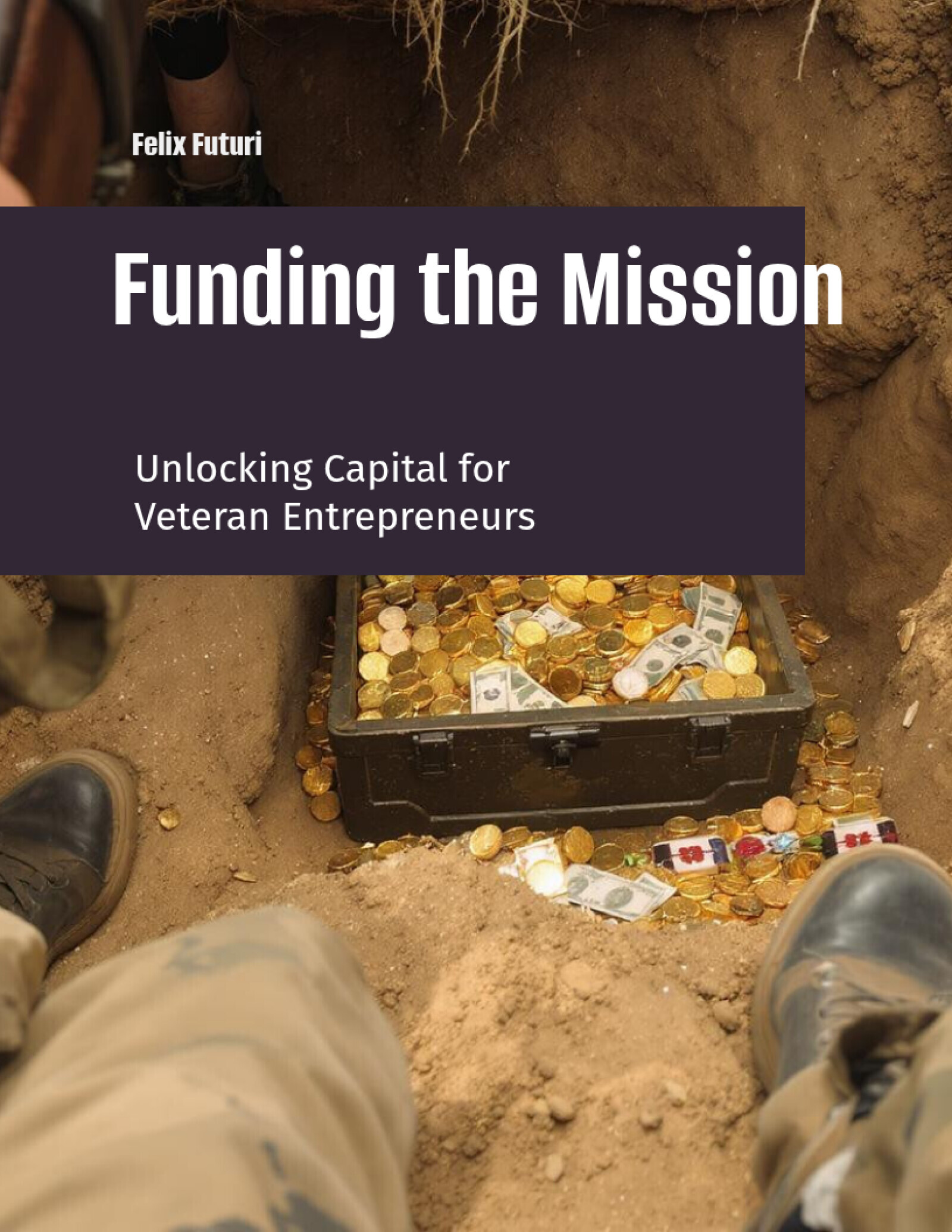








[…] businesses: Grants, tax breaks, and low-interest loans tailored for veteran businesses. […]
[…] platforms like Instagram and Facebook to create […]
[…] Examples of Workflow […]
[…] Automation tools collect and analyze data, giving you insights to make smarter choices. Google Analytics, for instance, tracks website…
[…] like LinkedIn and Instagram are powerful networking tools. Share valuable content, engage with industry leaders, and showcase […]