
Ever feel like you’re running a charity for big tech delivery apps instead of a restaurant business?
You bust your hump preparing authentic, high-quality food, only to watch third-party delivery platforms take a 30% cut of your hard-earned revenue. For veteran business owners, this isn’t just a bad partnership; it’s a direct hit to your operating margin. I remember sitting down with a army buddy of mine who opened a Thai spot in Austin. He was working twelve-hour days, turning out incredible Pad See Ew, but his bank account was bone-dry. Why? Because he was paying thousands of dollars a month to third-party delivery giants just to “discover” customers he already had. It was a classic tactical error: outsourcing his most valuable asset—his customer relationship—to a middleman.
There is a better way to run your culinary mission. Transitioning to a direct-to-consumer Thai restaurant online ordering system is the ultimate strategic maneuver to reclaim your profits, protect your culinary authenticity, and build a modern, high-yield digital asset.
The Complex Battleground of Thai Menus
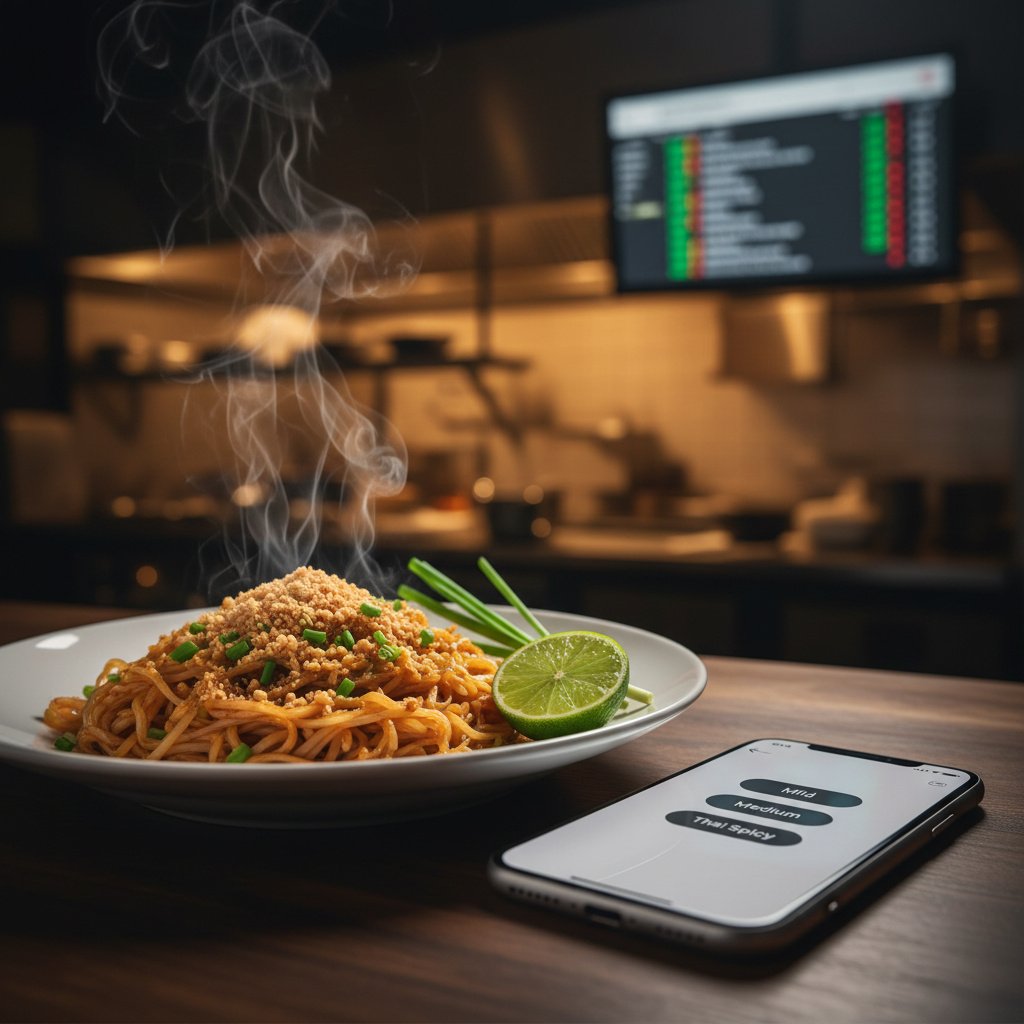
Thai cuisine is not like selling burgers. You can’t just throw bread, meat, and cheese together and call it a day. Thai food is an art form of balancing sweet, sour, salty, and spicy notes. Your dishes require extensive customization. If your customer wants a Green Curry, they need to select a protein, specify a spice level from 1 to 5, and maybe ask to hold the bamboo shoots. Most off-the-shelf food ordering systems simply cannot handle this level of complexity.
Have you ever seen a kitchen staff scramble during a Friday night rush because a generic online ordering platform failed to convey that a guest wanted their Pad Thai sauce packaged separately to keep the noodles from getting soggy? It ruins the dish, disappoints the customer, and frustrates your line cooks. Your custom e-commerce solution must handle these complex modifications natively. This keeps your kitchen running smoothly and ensures the food arrives at the customer’s door exactly as chef intended.
Furthermore, relying on third-party aggregators strips you of your data. When a hungry local orders your famous Tom Yum soup through a major delivery app, that app owns their name, email, and purchasing habits. You get a ticket and a heavily discounted payout. By implementing a direct restaurant e-commerce tool, you capture that data. This lets you build direct marketing relationships to turn a one-time diner into a loyal, long-term asset.
Operational Integration: No More Double-Handling
As veterans, we know that administrative drag kills operational efficiency. Yet, many restaurants still operate with a counter full of vibrating tablets, requiring hosts to manually re-enter online orders into the main Point of Sale (POS) terminal. This double-handling is a recipe for manual entry errors and massive bottlenecks during peak dinner rushes.
Your online ordering system needs to integrate directly with your POS and Kitchen Display System (KDS). When an order comes in from your website, it should flow straight to the kitchen line without human intervention. Solutions like TouchBistro, SpotOn, and SkyTab offer streamlined, cloud-based POS setups that bridge the gap between digital orders and the kitchen line. This unified approach keeps food moving quickly and accurately.
Modern restaurant technology also solves the inventory headache. If you run out of essential Thai fresh holy basil or firm tofu on a busy Saturday, your system should automatically update your online menu in real-time. This prevents the awkward phone call to a customer explaining that the dish they just paid for online cannot be made. Direct integration means your digital storefront always matches your kitchen’s actual physical inventory.
Choosing the Right Weapon: Commission-Free Platforms
How do we stop the financial bleeding exactly? The answer lies in commission-free online ordering models. Platforms like ChowNow operate on a flat monthly subscription rather than taking a percentage of every dish you sell. This is the “Profit Protector” model that every business owner should be looking for.
Think about the math of flat-fee systems versus commission setups. If your restaurant does $15,000 a month in online sales, a third-party app charging 30% takes a whopping $4,500 out of your pocket. A commission-free platform charging a flat fee of $150 to $200 a month saves you over $4,000 every single month. That is cash you can reinvest into your staff, better ingredients, or local marketing campaigns to grow your brand footprint.
These platforms also give you the tools to launch your own branded mobile apps and custom web portals. When a customer downloads your dedicated app to order their weekly Massaman Curry, you occupy prime real estate on their smartphone. You are no longer competing side-by-side with ten other local noodle shops on a giant directory app; you are building your own digital brand community.
High-Yield Tech Features That Drive ROI
To maximize your return on investment, your platform must do more than just process credit cards. It needs to work actively as a marketing engine for your business. Let’s look at the killer features that drive real bottom-line growth:
- Detailed Customization Interfaces: Clear, visual menu systems that allow customers to easily choose their proteins, adjust heat levels, and add appetizers to their carts automatically.
- Dine-In QR Code Ordering: Allows guests at your physical tables to scan, order, and pay on their own devices. This reduces the pressure on your front-of-house staff and speeds up table turn times.
- Marketing Automation and Analytics: Behavior-based segmentation that lets you send automated, targeted promotions. Imagine sending a text discount for a free Thai Iced Tea to customers who haven’t ordered in 30 days.
- Fraud and Chargeback Protection: Elite enterprise systems offer built-in merchant protection, taking the hit for credit card fraud so you don’t lose inventory and cash to online scammers.
Having secure, diverse payment methods like Apple Pay, Google Pay, and contactless card options is also critical. The easier you make it for customers to checkout, the higher your conversion rates will be.
The Tactical Execution Roadmap
Ready to deploy this upgraded operational plan? Let’s break down the transition into four distinct phases:
Phase 1: Audit and Select
Analyze your current monthly delivery statements and calculate exactly what you are paying in commissions. Look at your existing POS system and determine if systems like ChowNow, TouchBistro, or SpotOn are the best physical fit. Ensure the platform you choose can handle the deep modifier options your Thai dishes require. You can learn more about these systems at our guide.
Phase 2: System Deployment
Build your new online ordering site and launch your custom-branded mobile app. Set up mandatory, user-friendly fields for spice levels and allergy warnings on key dishes. Test the entire order flow to ensure tickets route directly to your kitchen staff without lag. Explore the integration options available at our integration page.
Phase 3: Customer Migration
This is where the battle is won. Use physical packaging inserts, table tents, and local social media campaigns to train your customers to order directly from your website. Offer incentives, like 10% off their first direct order, to break their habit of using high-commission delivery apps.
Phase 4: Analyze and Optimize
Review your sales metrics monthly. Dive into your customer behavior data to see which dishes perform best online, and adjust your menu design accordingly. Use automated campaigns to keep your digital guests coming back for more.
Take Back Control of Your Kitchen
Are you ready to stop tipping third-party apps with your hard-earned restaurant margins?
Investing in your own direct online ordering system is a decisive move that protects your margin, owns your customer relationship, and streamlines your kitchen workflow. Take a close look at your current delivery commissions this week. Pick a robust, commission-free platform that integrates directly into your POS, and deploy it to build a highly profitable culinary enterprise.
Book a 15 minute discovery call to find out more today at https://digifidelis.com/calendar/











[…] businesses: Grants, tax breaks, and low-interest loans tailored for veteran businesses. […]
[…] platforms like Instagram and Facebook to create […]
[…] Examples of Workflow […]
[…] Automation tools collect and analyze data, giving you insights to make smarter choices. Google Analytics, for instance, tracks website…
[…] like LinkedIn and Instagram are powerful networking tools. Share valuable content, engage with industry leaders, and showcase […]