
The Trap of the Reactive Holiday Rush
Have you ever found yourself standing in your walk-in freezer on the morning of December 26th, staring at crates of unused, highly specialized inventory, wondering where your holiday margin went? It is a sickening feeling. You ran the promotions, your staff worked double shifts, and the dining room looked busy. Yet, when you look at the spreadsheet, your profit margins look like they just survived a heavy mortar attack.
A few years ago, I sat across from a veteran who had purchased a busy Thai restaurant. He was a retired staff sergeant who could coordinate a complex multi-vehicle convoy in his sleep, but when it came to his restaurant marketing, he was operating week-to-week. Every time a major holiday or seasonal shift approached, his team scrambled. They threw together last-minute discounts, printed cheap paper flyers, and hoped for the best. The result was pure operational chaos. Cooks were stressed by surprise menu changes, food waste skyrocketed, and local competitors ran circles around them because they had planned their plays months in advance.
That was his wake-up call. He realized that a restaurant seasonal marketing campaign is not a creative exercise; it is an operational campaign. Just like any military operation, it requires logistics, intelligence, clear timing, and relentless execution. Once he mapped out his year with the same discipline he used in the service, his food waste dropped by 18%, and his average holiday check value jumped by nearly a third.
If you are running a restaurant, you cannot afford to treat seasons as surprises. Seasonal demand is highly predictable. The calendar does not change. Diners’ buying patterns shift with the weather, local school schedules, major sports events, and regional holidays. To win, you need to stop reacting to the calendar and start dominating it through systematic planning.
Building Your Master Campaign Calendar
The core strategic error most operators make is starting their planning too late. If you are designing your Valentine’s Day offer in January, you have already lost. The strongest operators build their seasonal marketing systems on a rolling 90-day horizon. This window gives you enough buffer to align your supply chain, train your staff, build marketing assets, and seed the market before your competitors even wake up.
Your master calendar needs to be a living, breathing document. Start by mapping out the macro-moments: the major federal holidays like Thanksgiving and Memorial Day, as well as high-intent dining days like Mother’s Day and Valentine’s Day. These are the heavy-artillery days when consumers have their wallets out and are actively looking for somewhere to spend money.
Next, layer in the micro-moments. These are the community-specific events that cost very little to leverage but yield hyper-local loyalty. Think about local high school graduations, municipal block parties, neighborhood sports seasons, or seasonal shifts in ingredient availability. Are you located near a stadium? Your season revolves around game days. Are you in a college town? Your calendar lives and dies by the academic semester.
For each targeted block on your calendar, assign a specific budget and a hard target metric. Do not settle for vague goals like “boosting brand awareness” or “creating a buzz.” Instead, write down precise, measurable objectives. Are you trying to fill a typically slow Tuesday night dead-zone? Are you looking to increase your digital takeout order volume by 20%? Or are you trying to drive catering bookings for local corporate offices? By tying every season to a specific business metric, you protect your margin and keep your team focused on what actually moves the needle.
Menu Engineering and the Art of the Limited-Time Offer
The center of gravity for any seasonal campaign is your menu. You do not need to redesign your entire culinary identity every three months; in fact, doing so will alienate your regulars and torture your kitchen line. Instead, you want to practice smart menu engineering by building a tight, high-margin architecture of Limited-Time Offers (LTOs) and themed bundles.
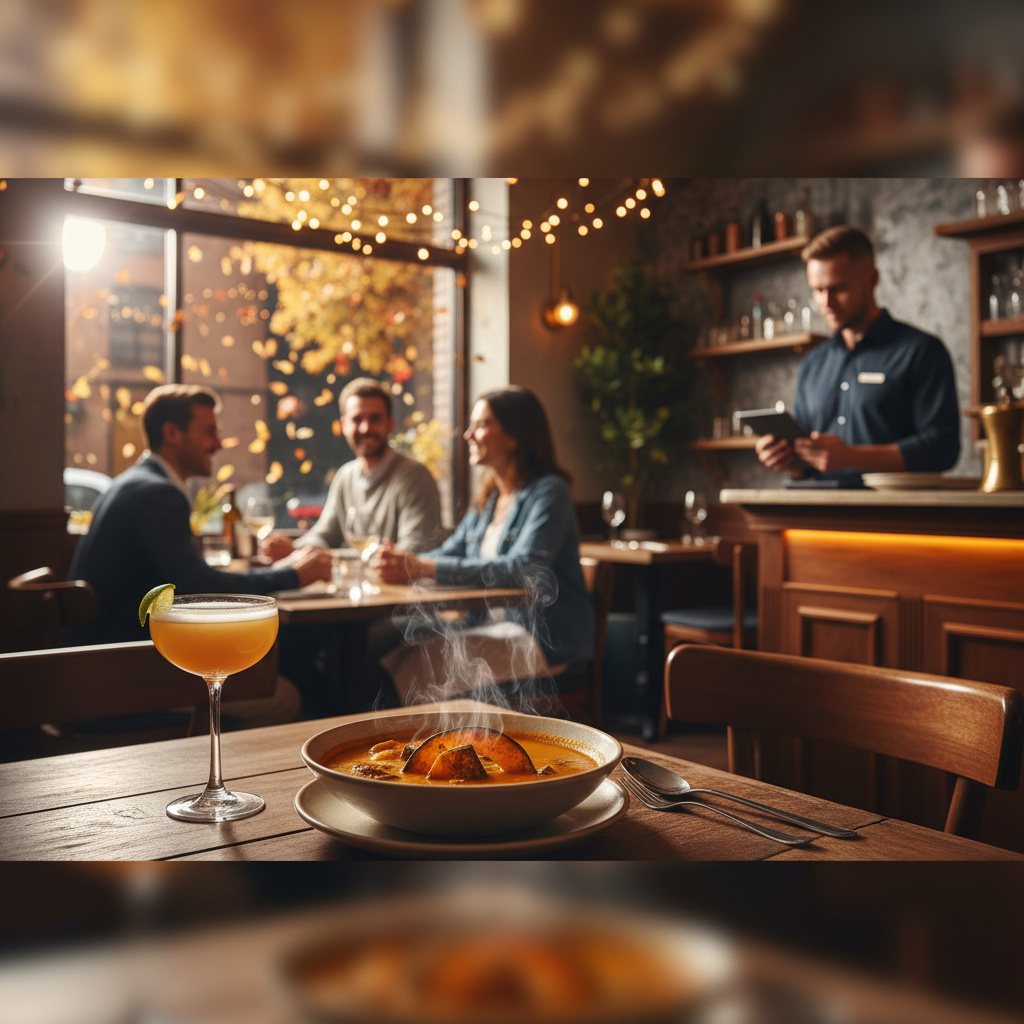
Consider how this works for a specialized concept. Let us look at Thai restaurant seasonal campaigns as a prime example of culinary adaptation. A traditional Thai menu is incredibly versatile, but if you do not translate it for the local climate, you miss major revenue opportunities. In the blistering heat of July, your customers are not craving heavy, steaming clay-pot noodle soups. They want crisp, light mango salads, vibrant summer rolls, and cold, citrus-forward lemongrass tea. Conversely, when the winter freeze sets in, you pivot. That is when you highlight rich, warming massaman curries loaded with roasted root vegetables, alongside spice-infused ginger broths that make guests feel warm from the inside out.
This approach connects your kitchen directly to what your guests are experiencing outside your front door. By highlighting fresh, seasonal ingredients at their peak crop cycles, you get three major benefits:
- Your food costs go down because those seasonal ingredients are abundant and cheaper to source.
- The quality and flavor of your dishes are at an absolute premium.
- You build a powerful sense of seasonal transition that keeps your menu feeling alive and dynamic.
When structuring these seasonal menu additions, use high-margin limited-time models. Create prix-fixe menus for couples on celebratory holidays, or bundle family-style platters for off-premise tailgating during football season. This creates natural urgency. If a guest knows that your signature soft-shell crab curry is only available for four weeks during the local spring harvest, they will make a point to visit your dining room before that window slams shut.
Synchronizing Your Promotional Channels
The most brilliant seasonal menu in the world is completely useless if your target audience does not know it exists. Too many operators post a single, uninspired photo on Instagram and wonder why their dining room remains empty. To drive real volume, your marketing must be a coordinated, multi-channel operation where every platform sings from the same sheet music.
Start with your organic search presence. When seasonal changes occur, people do not just stroll down Main Street looking for signs; they search using highly specific intent terms. They google “best holiday catering near me,” “outdoor patio brunch,” or “cozy winter date night ideas.” To capture this traffic, you must optimize your local SEO. Update your Google Business Profile with seasonal posts, upload high-quality photos of your temporary menu items, and write blog posts on your website that naturally feature your keywords. If you are a Thai restaurant running specialized holiday marketing, make sure your digital menu updates reflect those seasonal keyword combinations dynamically.
Next, mobilize your owned media: your email list and SMS subscribers. These are your most profitable channels because you do not have to pay advertising networks to reach them. Send a targeted email sequence to your VIP guests at least two weeks before a seasonal launch. Give them early access to dinner reservations or exclusive pre-orders for holiday catering packages. A simple, well-crafted SMS message sent at 4:30 PM on a rainy autumn Thursday—promoting a warm curry special with a direct order link—will do more for your evening checkout volume than a week of unguided social media posting.
Support these organic efforts with targeted local paid ads. Instead of blasting a wide geographic radius, drop a tight pin around your physical location and focus on users within a 5-to-10-minute drive time. Target your ads to match specific dayparts. Deliver high-energy ads showcasing your seasonal lunch bundles during the mid-morning office scramble, or present cozy dinner specials to local residents winding down their workdays.
Unlocking Hidden Revenue Levers
While food sales are your daily bread, seasonal campaigns provide prime opportunities to unlock massive, high-margin secondary revenue streams. Two of the most powerful levers at your disposal are gift cards and user-generated content (UGC).
Most independent restaurants treat gift cards like a boring afterthought—a piece of plastic sitting near the cash register. Successful operators view gift cards as an elegant way to pull future revenue forward into the present quarter. This is incredibly valuable during the peak holiday season between November and December. Instead of selling a simple face-value card, bundle it as an experiential package. Do not just sell a $100 gift card; sell “The Premium Thai Date Night Package,” which includes an appetizer, two entrees, dessert, and a curated drink pairing. This shifts the consumer’s perception from buying store credit to buying a memorable experience.
To sweeten the deal, implement a “bounce-back” promotion. For every $100 spent on gift cards in December, give the buyer a $20 promotional card that is only valid during January or February. This accomplishes two things at once: it pads your bank account with interest-free capital during the holidays, and it guarantees a steady stream of foot traffic during the slow, freezing weeks of early winter when restaurant margins typically suffer.
For marketing that spreads organically, design your dining room and plates to encourage user-generated content. You do not need to install gaudy neon signs, but you should curate highly visual details. A beautifully garnished, steaming hot pot of Tom Yum soup, served with dramatic tableside presentation, practically begs to be photographed and shared on Instagram. Create a simple, clear physical prompt in your menu or on table tents, inviting guests to share their seasonal experiences using a branded hashtag. When their friends see authentic photos of your incredible seasonal spread, your guests become your sales force, building massive local credibility for your brand without costing you a single dime in ad spend.
The Post-Operation debrief: Measuring What Matters
In the military, an operation is not truly complete until you conduct an After Action Review (AAR). The exact same rule applies to your restaurant seasonal marketing campaigns. Far too many restaurant owners run a promotion, breathe a sigh of relief when it ends, and immediately jump into the next firefight without analyzing what actually happened.
Set aside time exactly one week after your campaign concludes to dive deep into your point-of-sale (POS) and marketing data. Do not get distracted by vanity metrics like social media likes or email open rates. While those show engagement, they do not pay your commercial rent. Instead, focus your energy on the hard, unvarnished business metrics:
1. Net Margin Contribution: Did the campaign actually generate clean profit, or did deep discounts and high food costs wash away your gains?
2. Average Ticket Value: Did your seasonal menu items and bundles successfully encourage guests to spend more per visit than your standard baseline?
3. Guest Acquisition vs. Retention: How many of your seasonal bookings were brand-new customers, and what concrete steps are you taking to convert them into year-round regulars?
4. Direct ROI: If you spent $1,000 on localized digital ads, can you trace a clear line to enough increased sales to justify that expense?
Document your findings meticulously. Write down what worked well, what failed operationally, where the supply chain bottlenecked, and how your staff handled the increased volume. File this report away securely. When the same season rolls around next year, you will not have to reinvent the wheel. You will simply pull out your proven playbook, optimize the weak points, scale the highly profitable elements, and execute with absolute confidence.
Success in this industry does not come from waiting for the perfect conditions or hoping for a lucky holiday rush. It comes from building a highly disciplined, repeatable system that capitalizes on predictable consumer behavior. Take a hard look at your marketing calendar for the upcoming 90 days. Lay out your objectives, coordinate your tactical channels, structure your operational menu, and get ready to run a campaign that puts real, measurable revenue in your bank account.
Book a 15 minute discovery call to find out more today at https://digifidelis.com/calendar/










[…] businesses: Grants, tax breaks, and low-interest loans tailored for veteran businesses. […]
[…] platforms like Instagram and Facebook to create […]
[…] Examples of Workflow […]
[…] Automation tools collect and analyze data, giving you insights to make smarter choices. Google Analytics, for instance, tracks website…
[…] like LinkedIn and Instagram are powerful networking tools. Share valuable content, engage with industry leaders, and showcase […]