
Did you ever have one of those moments where you realized you were fighting the last war instead of planning the next battle?
I remember my second year running a hospitality space. It was late November, the temperature had plummeted, and our business was caught completely flat-footed. We sat in an empty dining room, staring at a mountain of left-over summer-themed inventory, while our inbox filled up with local corporations asking if we did holiday catering. We didn’t. We had completely missed the planning window because we relied on the dangerous assumption that people would just keep walking through the door on their own schedule. It was a painful, expensive lesson in operational complacency.
In the culinary world, hope is not a viable business strategy. Waiting until November to design your holiday marketing is the equivalent of starting to pack your rucks while the transport truck is already idling down the road. True seasonal marketing isn’t about slapping cheap tinsel on the host stand or running a generic discount. It is a highly coordinated strategy designed to align your menu, your messaging, and your staff with the predictable shifts in guest behavior. For veteran business owners, this is an exercise in operational precision.
The Tactical Calendar: Mapping Your Revenue Terrain
Operating a restaurant without a seasonal marketing calendar is like sailing without a tide chart. You are constantly fighting the current. Instead of reacting to the weather on a weekly basis, seasoned operators divide their year into distinct, cyclical quarters of customer demand. To build a highly effective marketing system, you must map your promotions to these shifts at least sixty to ninety days in advance.
Consider the natural rhythm of dining behavior across a typical calendar year. You have the high-intensity holiday marketing rush in the late autumn, the post-holiday recovery freeze in January, the spring graduation and family holidays in May, and the casual, outdoor-dining search behavior of mid-summer. Each of these represents a shift in why people eat out, who they eat with, and how much they are willing to spend.
According to industry benchmarks, holiday bookings and seasonal campaigns can account for up to 30% of an independent restaurant’s annual profits. Yet, almost 40% of small operators wait until mid-autumn to launch their campaigns. By mapping your calendar early, you lock in group reservations, secure early cash flow, and avoid the high pricing spikes of last-minute marketing. Your operational objective is simple: create a repeatable, annual playbook that protects your cash flow during lean months and maximizes average check sizes during high-demand windows.
Culinary Alignment: Engineering Your Seasonal Menu
The core of any seasonal marketing campaign is your product. This is where many owners make the mistake of overcomplicating things. You do not need to rewrite your entire menu every three months; instead, focus on high-margin, limited-time offers (LTOs) that feature ingredients that are globally or locally in season. Testing indicates that adding strategic, limited-time plates can raise average check sizes by 12% to 15% when paired with educated upsells from your service staff.
Let’s look at a concrete example of this concept in action. Imagine you run a neighborhood Thai restaurant. Your signature flavors are built on a balance of sweet, sour, salty, and spicy notes. How do you translate those flavors into a seasonal context without losing your brand’s culinary identity?
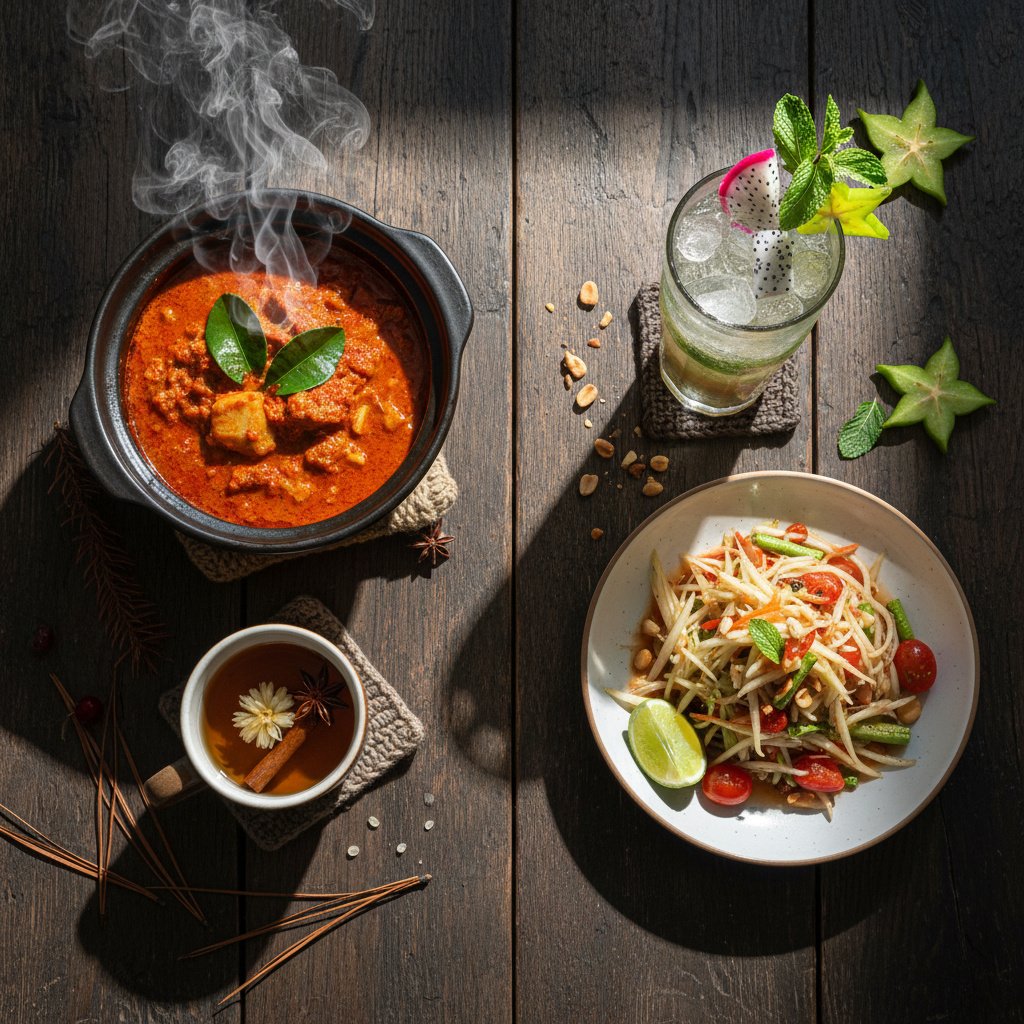
During the cold winter months, your customer wants warmth, shelter, and comfort. Your marketing should spotlight rich, warming curries made with roasted root vegetables, steaming noodle soups, and shared family-style platters. Your social media should feature the rising steam from a fresh bowl of Tom Yum, evoking an immediate physical craving for heat.
When summer rolls around, that heavy curry sounds about as appealing as a winter coat in July. Your promotions must pivot to cooler, lighter dining options. This is the time to highlight refreshing green papaya salads, citrus-forward dipping sauces, grilled skewers, and bright mocktails featuring fresh mint and lemongrass. By emphasizing lighter profiles, outdoor patio dining, and cold beverages, you keep your brand highly relevant. More importantly, seasonal ingredients are often more abundant and inexpensive, directly lowering your food costs and protecting your margins.
The Multi-Channel Digital Offensive
If you build a phenomenal seasonal menu but fail to market it across different platforms, you are hosting a party that nobody knows about. In modern restaurant marketing, consumers discover, evaluate, and book their tables through search engines and mobile screens. You must secure this digital high ground with a coordinated message across your email lists, short message service (SMS), local SEO, and social channels.
Let’s look at how these channels should work in close coordination with one another:
- Local SEO and Google Business Profile: This is where high-intent diners look for immediate solutions. Update your profile descriptions and active menus to match seasonal search terms. Phrases like “best winter comfort food nearby” or “Thai terrace dining” help search engines match your business with active local diners.
- Seasonal Landing Pages: Do not delete your seasonal pages when the event ends. Keep a permanent, hidden page on your website for major occurrences (for example,
yourshop.com/holiday-catering). By leaving this page online year-round, you preserve historical search ranking power and make future annual updates a simple, five-minute task. - SMS Campaigns: This is your tactical reserve. Text messages hover around an outstanding 98% open rate, making them perfect for sudden, weather-driven promos. If a surprise summer heatwave hits, a quick text blast saying, “Beat the heat tonight with a free signature chilled tea on our patio,” can fill empty tables within a three-hour window.
- Email Integration: Your email list is your owned media. Use it to offer exclusive, early reservation booking access to your VIP customers. Give them a 48-hour head start to book prime slots for Thanksgiving, Mother’s Day, or Valentine’s Day before opening reservations to the general public.
Do you notice how these channels reinforce each other? The social media posts generate the initial visual desire, the email campaign captures the direct booking, the SMS handles the last-minute traffic spikes, and search engine optimization secures the newcomer who is just driving through town looking for a great meal.
Operational Safeguards: Setting Your Rules of Engagement
Marketing is only half the battle. If your digital campaign is incredibly successful and floods your dining room with traffic, but your kitchen crashes under the weight of the new menu items, you have successfully bought yourself a wave of terrible online reviews. A promotion is only as good as your team’s ability to execute it under pressure.
Every seasonal offering must go through a rigid operational vetting process. Ask yourself: Can the kitchen team plate this dish consistently in under eight minutes during a heavy dinner rush? Have you pre-tested the recipes to identify potential inventory supply chain bottlenecks? If an ingredient is hard to source, a sudden delivery delay can crush your entire marketing campaign before it even starts.
Equally important is training your front-of-house staff on active suggestive selling. Do not assume your servers know how to pitch your new items. Give them clear scripts and hold pre-shift tastings so they can describe the flavors with genuine enthusiasm. Instead of a generic question like, “Do you want to see our drink list?” teach them to say, “Our seasonal lemongrass cocktail pairs beautifully with the spice in that Massaman curry.” This subtle change turns order-takers into consultative guides, elevating the dining experience and driving up the total bill.
Finally, protect your pricing structure. It is tempting to offer steep discounts to bring crowds in during slow periods, but constant discounting trains your customer base to only value your brand when it is cheap. Instead of lowering your prices, focus on bundling value. Create fixed-price tasting menus, unique holiday beverage pairings, or convenient takeaway party platters that simplify family gatherings. This keeps your brand prestige intact while keeping your average transaction value healthy.
The After-Action Review: Cultivating Predictable Growth
The final step in a veteran-led marketing system is the post-campaign analysis. Once the holiday decorations are packed away or the summer patio furniture is stored, sit down with your management team to conduct an After-Action Review (AAR). Do not rely on loose impressions or gut feelings. Dig deep into the hard business metrics.
Look at your point-of-sale data to determine which seasonal dishes actually performed well and which ones sat on the shelf. Review your labor costs, food waste logs, reservation booking response times, and the redemption rates of your digital offers. Document exactly what worked, where the communication broke down, and how many new guests you managed to convert into returning patrons.
Save these findings in a dedicated marketing binder. When the same season rolls around next year, you will not have to reinvent the wheel or scramble for creative ideas. You will simply pull out your documented playbook, review your past lessons, make a few adjustments for current market conditions, and run your established tactics with absolute, quiet confidence. That is how structured business owners transition from stressful, reactive fire-fighting to calm, highly profitable, and predictable year-round success.
Book a 15 minute discovery call to find out more today at https://digifidelis.com/calendar/











[…] businesses: Grants, tax breaks, and low-interest loans tailored for veteran businesses. […]
[…] platforms like Instagram and Facebook to create […]
[…] Examples of Workflow […]
[…] Automation tools collect and analyze data, giving you insights to make smarter choices. Google Analytics, for instance, tracks website…
[…] like LinkedIn and Instagram are powerful networking tools. Share valuable content, engage with industry leaders, and showcase […]