
The Cold Tuesday Reality
Have you ever stared at your point-of-sale reports after a blistering holiday weekend, only to realize you barely made a dent in your quarterly margins? I remember a freezing Tuesday in January years ago. The holiday rush was over, the dining room was quiet, and the only sound was the low hum of the glass-door coolers. We had run a massive discount campaign in December to drag people through the doors, but looking at the net numbers, we had essentially paid people to eat our food. We had the volume, but we didn’t have the profit.
That was the moment I realized that most restaurant marketing is treated like a series of emergency drills. We scramble to react to slow periods by tossing out discounts, hoping something sticks. But running a restaurant this way is like fighting a wildfire with a squirt gun. True operational success does not come from desperate, one-off promos; it comes from treating your calendar as a structured, defensive asset.
For veteran business owners, strategic seasonal marketing is not about chasing novelty. It is a disciplined system of demand shaping, margin protection, and guest reactivation. When you shift your mind from “What coupon can we run this week?” to “How do we engineer predictable revenue curves?”, your entire operation changes. You stop reacting to the calendar, and you start commanding it.
The Four-Season Revenue Grid
To run a highly profitable program, you must divide your year into four distinct revenue seasons, treating each like an operational phase. Each phase requires a different tactical posture because guest psychology and spending habits shift with the weather. Instead of slashing prices, we look for ways to bundle value, elevate the occasion, and build offers that are operationally seamless to execute.
Consider how this looks in practice. In the winter phase, your focus is on warmth, comfort, and local loyalty. Spring demands renewal, lighter ingredients, and event-based invitations. Summer relies on outdoor spaces, shared platters, and high-margin social drinking. Fall and the holidays require absolute urgency, structured gifting, premium experiences, and corporate accounts. By mapping your menu changes and marketing messages to these natural rhythms, you build a consistent cadence that your guests learn to anticipate.
The secret is offer architecture. Instead of cheapening your brand, you create limited-time events (LTOs) and fixed-price menus. These formats create natural scarcity without eroding your pricing integrity. They tell your market, “This is special, it is here right now, and if you wait, you will miss it.”
Designing Thai Restaurant Seasonal Campaigns
Let’s look at a concrete example using Thai restaurant seasonal campaigns. Thai cuisine is uniquely suited for seasonal marketing because its culinary foundation is built on balance: sweet, sour, salty, savory, and spicy. This flavor profile allows you to pivot your seasonal menu structure without needing to retrain your entire kitchen prep line.
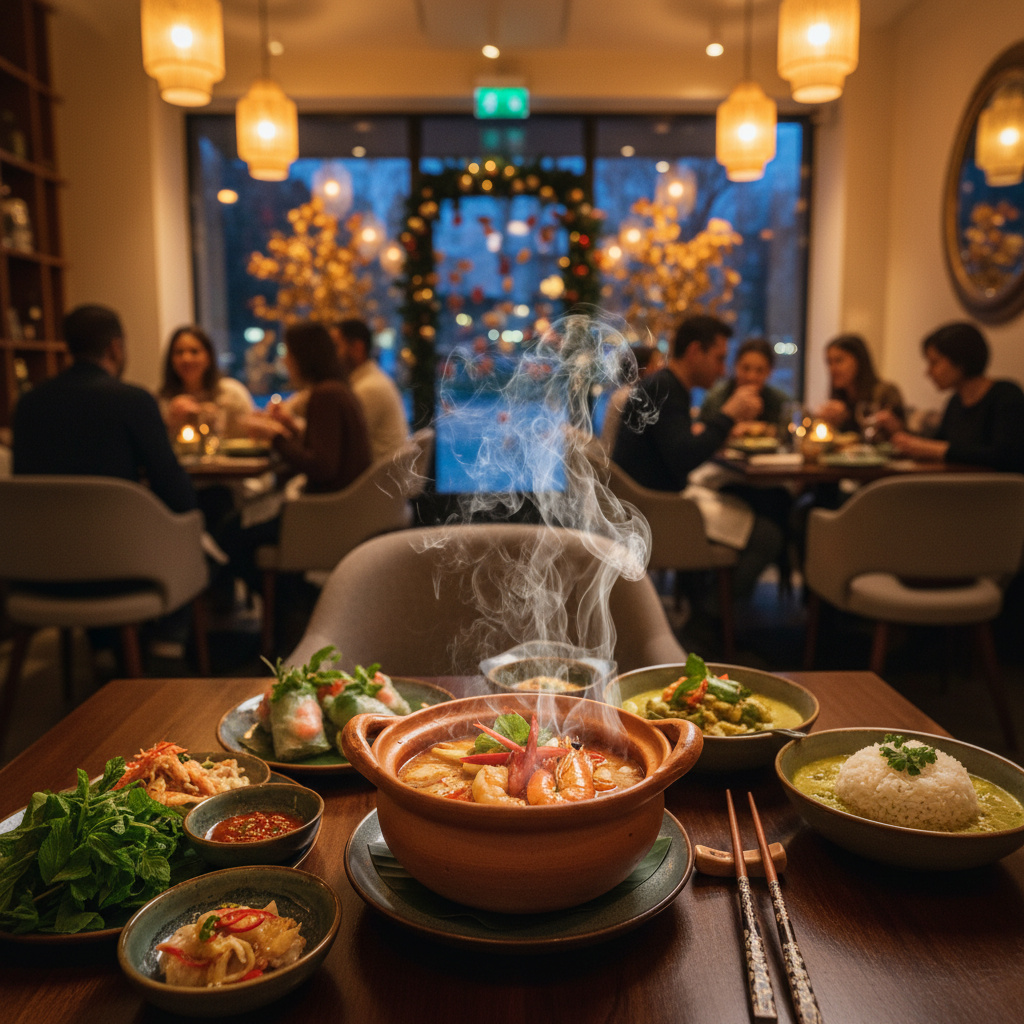
In the winter months, your strategy should lean heavily into deep comfort. Think rich, aromatic curries, slow-simmered bone broths, and steaming noodle dishes served in heavy clay pots. You can bundle these into a “Curry & Cozy” winter tasting menu designed for communal, family-style dining. By framing winter around warmth and local neighborhood nights, you convert your slowest months into a cozy retreat for your most loyal nearby residents.
As the weather warms into spring, you pivot toward fresh herbs, bright citrus, and crisp textures. This is the perfect time to celebrate cultural milestones like Songkran (the Thai New Year) by introducing limited-time, vibrant regional specials. In the summer, your patio or terrace becomes your primary margin generator. Focus your messaging on chilled craft cocktails infused with lemongrass or kaffir lime, paired with chargrilled chicken skewers and light green papaya salads. These high-margin, low-prep items keep your kitchen cool and your ticket times fast during peak outdoor dining hours.
The Multi-Layered Holiday Engine
When fall transitions into the holiday period, the strategic stakes rise. Most operators view holiday marketing as a single December sprint, but experienced veterans know that the holidays are a multi-layered campaign that begins at least six to eight weeks before the first snow falls. If you wait until late November to plan your holiday marketing, you have already conceded the field to your competitors.
The holiday period is incredibly valuable because consumer transaction volume rises, and average ticket sizes naturally swell. To capture this high-yield traffic, you need to flatten the demand curve. This means designing mid-week corporate catering packages, hosting early November “Friendsgiving” tasting dinners, and creating winter comfort-food preview events. You want booking commitments and deposit revenue in your bank account before December even arrives.
Prepaid products are your best friend during this high-stakes season. Ticketed holiday dinners, pre-ordered family feast packages for pickup, and holiday party bookings with non-refundable deposits allow you to secure cash flow and project your inventory needs with extreme accuracy. This is how you protect your margins when supply chains get tight and labor costs spike.
Unlocking the Power of Gift Card Structures
One of the most reliable weapons in your seasonal toolkit is a structured gift card program. Gift cards are far more than simple pieces of plastic or digital barcodes; they are a dual-purpose tool for immediate cash injection and future guest acquisition. They bridge the gap between high-volume quarters and slow seasonal dips.
Instead of hoping people buy cards, you must incentivize them with a structured bonus offer, such as “Buy a $100 gift card, receive a $20 bounce-back voucher.” The genius of this structure lies in the timing. You sell the gift card during the chaotic holiday season when spending is high, but the $20 bounce-back voucher is only valid from January 2nd through February 28th. This simple rule channels post-holiday traffic right into your slowest winter valley.
For a Thai restaurant, you can elevate this tactic by moving away from generic monetary values. Package your gift cards as invitations to exclusive culinary experiences. Sell a “Thai Date Night Voucher” or a “Family Feast Pass” that includes a set meal for a specific price. This shifts the guest’s perception from spending a cash equivalent to gifting an unforgettable, sensory experience.
Orchestrating Your Marketing Channels
A brilliant seasonal menu is useless if your local community doesn’t know it exists. Capturing attention requires a coordinated, multi-channel approach. You must align your email, SMS, social media, and on-premise physical signage to deliver a singular, clear message. When your channels are synchronized, your marketing operates like a well-coordinated campaign.
Email is your foundation for deep storytelling and early bookings. Use your email database to give loyal guests first access to holiday dinner reservations, private catering options, and seasonal menu previews. Keep the tone personal, direct, and transparent. Share the inspiration behind your new winter curry or the history of your spring Songkran feast.
While email excels at building relationships and driving reservations, SMS is your tool for immediate action and real-time urgency. Use text message marketing to fill open tables on a slow rainy night, announce flash promotions, or remind guests that a popular limited-time offer is ending this weekend. Because text messages have incredibly high open rates, they must be used sparingly and with high-value offers that feel highly exclusive.
On social media, stop posting static photos of food plates with generic descriptions. Show the human energy behind the scenes. Share short video reels of your kitchen prep team roasting chilies for the house-made chili paste, or your bartenders mixing fresh coconut cocktails for the summer patio launch. This visual storytelling builds anticipation and makes your restaurant a destination, not just another dinner option.
Ensuring Operational Readiness
The most creative marketing campaign in the world is a failure if your kitchen line, floor staff, and inventory systems cannot execute it under pressure. As a veteran owner, you know that operational feasibility is the lens through which every single idea must be filtered. If a seasonal campaign breaks your back-of-house flow or spikes your ticket times, it will destroy your guest experience and erode your long-term profits.
When designing seasonal menu items, select ingredients that cross-utilize existing inventory. If you are introducing a premium seasonal roasted duck curry for the winter, make sure that same duck meat can be used in your lunch noodle bowls or holiday catering trays. This limits food waste and keeps your storage needs manageable.
Furthermore, ensure that your seasonal recipes are scalable and easy to prep ahead of time. During high-volume holiday rushes, your kitchen staff should not be performing intricate, multi-step knife work on the fly. Focus on high-impact, beautifully styled garnishes and rich sauces that can be prepared in bulk during morning prep hours. When your dishes are simple to execute under fire, your kitchen remains calm, your ticket times stay consistent, and your profit margins remain secure.
The Community-Based Growth Loop
One of the fastest ways to expand your local audience and build credibility is through strategic community partnerships. Collaborating with other high-quality local businesses allows you to share customer bases and create unique events that paid digital advertising simply cannot duplicate.
Consider partnering with a nearby craft brewery to host a Thai-spiced beer pairing dinner during the slower autumn months. Or team up with a local florist to create beautiful, botanical-themed table settings for a spring garden party event. These collaborations work because they are mutually beneficial; both businesses promote the event to their unique databases, splitting the marketing workload while doubling the organic reach. It builds local goodwill and positions your restaurant as an active, integrated pillar of the local business community.
Turning Seasonal Guests into Lifelong Patrons
The true measure of a successful seasonal marketing campaign is not just the immediate spike in weekend revenue. It is your ability to turn a first-time seasonal guest into a regular, year-round patron. If a customer visits your restaurant for an exclusive holiday dinner, but you never touch base with them again, you have missed the most valuable part of the customer journey.
Every seasonal touchpoint must include a clear mechanism for future retention. Use bounce-back cards, follow-up emails, and digital loyalty invites to give these guests a logical reason to return in the following weeks. When a holiday party guest pays their bill, hand them a small, sealed envelope containing a mystery gift voucher valid only during the quiet winter weeks of January.
By treating seasonality as a disciplined, repeatable loop, you build a sustainable revenue engine that levels out the chaotic highs and lows of the restaurant industry. It is a structured approach that respects your staff, protects your food costs, and delivers predictable, consistent profitability every single month of the year.
Book a 15 minute discovery call to find out more today at https://digifidelis.com/calendar/











[…] businesses: Grants, tax breaks, and low-interest loans tailored for veteran businesses. […]
[…] platforms like Instagram and Facebook to create […]
[…] Examples of Workflow […]
[…] Automation tools collect and analyze data, giving you insights to make smarter choices. Google Analytics, for instance, tracks website…
[…] like LinkedIn and Instagram are powerful networking tools. Share valuable content, engage with industry leaders, and showcase […]