Do you remember the predictability of the military deployment cycle? You had your pre-deployment workups, the deployment itself, the sustainment phase, and the eventual transition back home. Every movement was mapped out on a master training calendar months in advance. You knew exactly when you needed ammunition, when your gear had to be packed, and when your team needed to be at peak readiness.
Then, you hung up the uniform, took a leap of faith, and opened a restaurant. Suddenly, that predictable rhythm evaporated. You found yourself staring at a dining room that was packed on Friday night but quiet as a tomb on a rainy Tuesday afternoon in November. You realized that the civilian market doesn’t run on standard operating procedures—it runs on seasons, emotions, and holidays. If you don’t have a plan to capture that shifting demand, you are fighting an uphill battle.
I remember sitting down with a fellow veteran, organic-chemist-turned-culinary-entrepreneur, who had just opened an upscale Thai restaurant in a bustling metro area. He was brilliant in the kitchen, but he was drowning in the unpredictable waves of guest traffic. “During the summer, our patio is packed for mango sticky rice and iced teas,” he told me, rubbing his temples. “But now it’s mid-November, the temperature is dropping, and my reservation book looks like a ghost town. How do I get them back through the door?”
My answer to him was simple: you need to treat your calendar like a tactical deployment schedule. You cannot wait for the seasonal shifts to catch you off guard. To master restaurant marketing, you must anticipate the terrain, prepare your logistics, and launch your seasonal marketing campaigns with absolute precision. Here is how you build a battle-tested roadmap to keep your tables full all year long.
Phase 1: Intelligence Preparation of the Battlefield (90 Days Out)
In the military, we never launched an operation without conducting Intelligence Preparation of the Battlefield (IPB). We analyzed the weather, the terrain, and civil obstacles. In the culinary world, IPB means mapping out your seasonal calendar at least three months before the weather actually changes or the holiday season arrives.
Too many business owners treat holiday marketing as a reactive sprint. They realize on February 10th that Valentine’s Day is just four days away, and they scramble to throw together a last-minute menu. By then, your competitors have already booked out their tables, secured their ingredient shipments, and locked down the local digital ad space.
To win this fight, you need a rolling 90-day planning cycle. Sit down with your kitchen manager, your front-of-house lead, and your marketing assets. Map out the upcoming quarter’s core events: national holidays, local community festivals, changing weather patterns, and school schedules. Identify your targets early so you can build your assets, test your recipes, and schedule your promotions before the daily chaos of the kitchen distracts you.
Phase 2: Adapting the Menu for Natural Human Desires
Seasonal shifts influence what we eat, how we spend our money, and where we seek comfort. Think about it: when the snow starts falling, people don’t crave light, crisp salads; they crave warm, rich, soul-satisfying comfort. Conversely, when the July heatwave hits, no one wants a heavy, boiling stew.
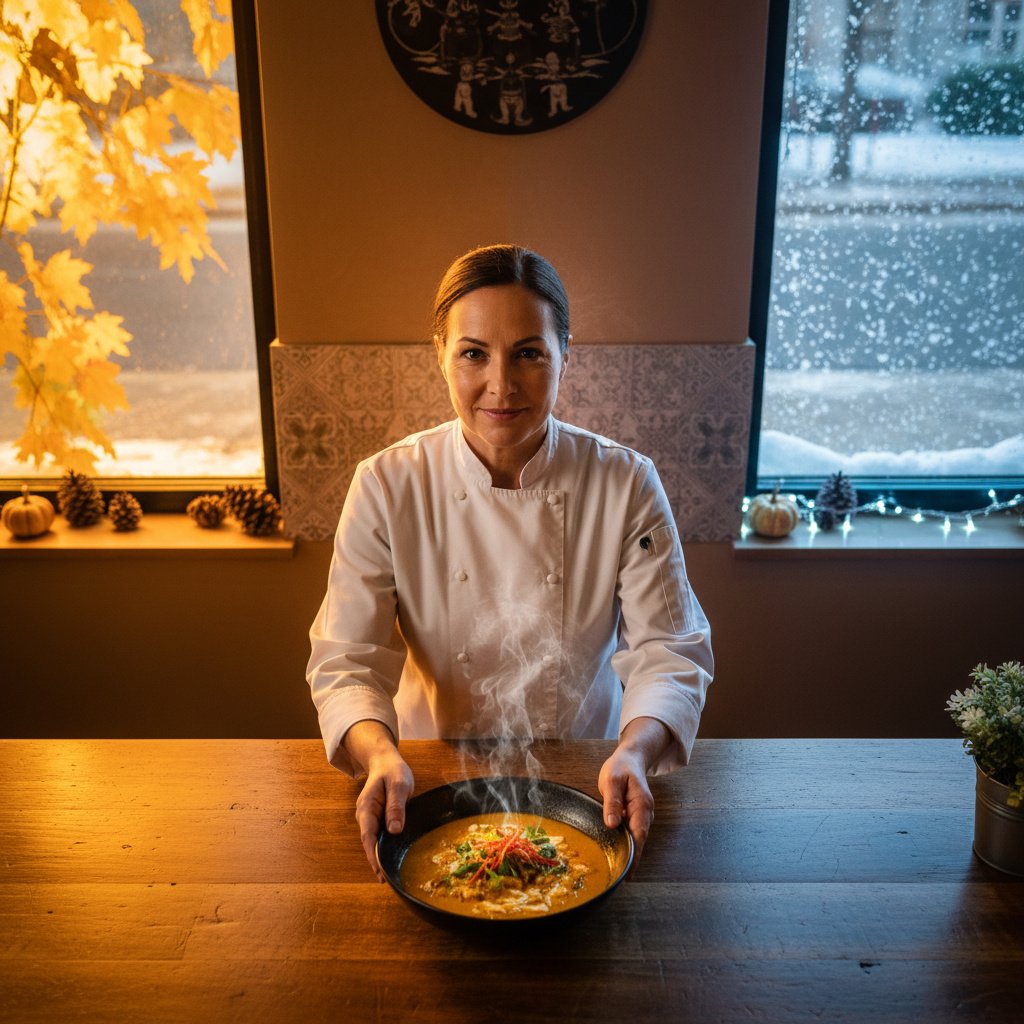
This is where seasonal campaigns get highly creative. Take that Thai restaurant we discussed. In the dead of winter, we helped them pivot their menu to highlight deeply aromatic, slow-simmered Massaman and Green Curries served in clay pots, alongside spiced hot tea pairings. We marketed these dishes as “culinary firesides”—warm, escaping havens from the biting winter wind. In the summer, we shifted the focus completely to vibrant, light seafood dishes, cold noodle salads, and refreshing lychee cocktails.
You don’t need to rebuild your entire menu every three months; that ruins your kitchen efficiency and blows up your food costs. Instead, keep a core lineup of your reliable signature dishes, and rotate 15% to 20% of your menu to reflect seasonal changes. This strategy accomplishes two things: it gives your loyal, regular guests a fresh reason to return, and it allows you to capitalize on high-margin, seasonally abundant ingredients.
Phase 3: Digital Firepower and Local Search Supremacy
Once your seasonal menu and event packages are designed, you need to deploy your digital assets. Your potential guests are searching for their next meal on their phones, and if you aren’t visible, you don’t exist. This is where strategic search engine optimization and targeted local outreach come into play.
Start with local SEO. When the seasons shift, search behavior shifts with them. People begin searching for terms like “best winter comfort food near me,” “outdoor patio dining,” or “holiday party venue booking.” If you want to capture this traffic, your website and Google Business Profile must be updated with these exact concepts.
- Create Dedicated Landing Pages: If you host a massive Mother’s Day brunch or a specialized Veterans Day tribute dinner, create a dedicated, easily shareable webpage for it. Don’t just post a PDF link of your flyer on Facebook.
- Leverage Warm Email Lists: Your email database is your most valuable organic marketing asset. Send out your seasonal announcements to your VIP guests first, offering them early reservation access. It costs nearly nothing to send an email, and the conversion rate is incredibly high.
- Unshackle the Power of Video: Do not just list your new autumn spiced dishes on a chalkboard. Take a high-definition, 10-second video of the steam rising off a freshly plated dish, or video your bartender crafting a signature holiday cocktail. Post these behind-the-scenes glimpses on Instagram and TikTok to stir up genuine craving.
Phase 4: Executing the Cross-Promotion and Community Playbook
No operational unit succeeds in complete isolation; you need strategic alliances. The same rule applies to your business. To maximize your reach, look for community partnerships that can amplify your message.
Consider teaming up with other local businesses for reciprocal marketing. For instance, partner with a nearby local theater during their winter production run to offer a “Dinner and a Show” package. If you run a premium dining spot, collaborate with a local florist for Valentine’s Day to offer customized tableside floral arrangements pre-ordered through your reservation system. This approach creates a smooth, stress-free experience for your guests while introducing your brand to entirely new audiences.
Additionally, tap into the incredible power of cause-marketing. As a veteran, service is likely a core element of your identity. Align one of your autumn seasonal marketing efforts with a local food bank or a veterans’ support non-profit. Dedicate a portion of the proceeds from a specific seasonal dish to their mission. Doing good in your community is not just high-integrity; it builds deep, enduring loyalty with guests who want to support businesses that share their values.
Phase 5: The After-Action Review (AAR)
In the military, we never finished a mission, threw our gear in a corner, and went to sleep. We sat down and conducted a rigorous After-Action Review (AAR). We asked ourselves: What was supposed to happen? What actually happened? Why did it happen? And how can we improve next time?
When your holiday rush ends and the dust settles, you must run an AAR on your campaign. Do not rely on “gut feelings” about whether it succeeded. Dig deep into your point-of-sale (POS) data, review your advertising spend, and look at your guest feedback.
Ask yourself these critical questions:
1. Which seasonal menu items actually sold, and which ones sat in the walk-in freezer wasting inventory capital?
2. Did our reservation system handle the peak load, or did we lose potential customers to long wait times?
3. Which marketing channel drove the lowest cost-per-acquisition: social media ads, email outreach, or local flyers?
4. Was our staff properly trained to upsell our higher-margin seasonal beverages?
Document these answers. File them away in your planning folder. When the same season rolls around next year, you won’t be starting from scratch. You will have a proven, battle-tested playbook ready to be optimized and executed with even greater speed and precision.
Your Next Mission
Success in the restaurant industry is not about waiting for a lucky break; it is about establishing a disciplined, repeatable operational cadence. The seasons will change whether we plan for them or not. The temperature will drop, the holidays will arrive, and guests will look for places to celebrate, escape, and connect.
Your directive is to take control of that cycle. Do not let the next season catch you playing defense. Grab your calendar right now. Look 90 days out. Identify your seasonal objective, rally your team, and begin planning your campaign today. The dinner rush is coming—make sure they are lining up at your door.
Book a 15 minute discovery call to find out more today at https://digifidelis.com/calendar/










[…] businesses: Grants, tax breaks, and low-interest loans tailored for veteran businesses. […]
[…] platforms like Instagram and Facebook to create […]
[…] Examples of Workflow […]
[…] Automation tools collect and analyze data, giving you insights to make smarter choices. Google Analytics, for instance, tracks website…
[…] like LinkedIn and Instagram are powerful networking tools. Share valuable content, engage with industry leaders, and showcase […]