
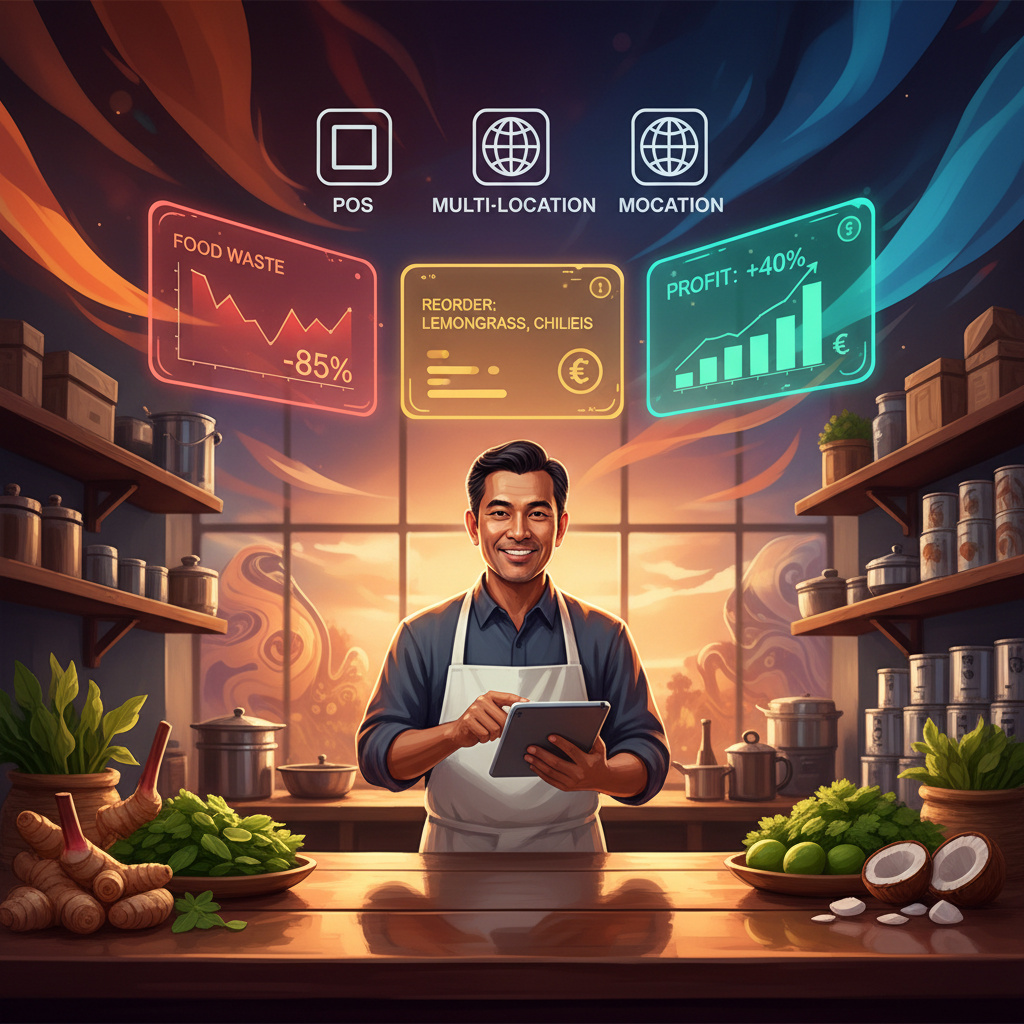
Ever Felt Like Your Inventory Is Running the Show?
Picture this: It’s a busy Friday night at your Thai restaurant. The kitchen’s humming, orders flying, but suddenly you’re out of that key ingredient for pad Thai—lemongrass, fresh and fragrant. You scramble, waste time on an emergency run, and watch your food costs spike. Sound familiar? As a veteran business owner, you’ve mastered discipline and strategy in tougher arenas, but restaurant inventory can feel like a battlefield without the right tools.
I’ve seen it too many times with fellow vets turning their entrepreneurial grit into thriving spots. That chaos? It’s not just annoying—it’s eating your profits. But here’s the good news: restaurant inventory automation flips the script. It hands you back control, slashes waste, and turns operational headaches into smooth, cost-saving wins. Let’s dive in.
The Story of a Thai Spot That Turned the Tide
Let me share a quick tale from a veteran-owned Thai restaurant chain I know. The owner, a former Marine named Alex, started with one location in a bustling city neighborhood. He poured his heart into authentic flavors—think spicy tom yum and creamy green curry—but inventory was his Achilles’ heel. Manual counts every week? Endless. He’d overorder perishables like basil and fish sauce, only to toss spoiled batches. Food costs hovered at 45%, squeezing margins thin.
One close call came during a peak season rush. A storm delayed deliveries, and without real-time tracking, Alex didn’t know his stock was dipping low on coconut milk. Customers waited, reviews dipped, and that night’s losses? Brutal. Alex hit pause, researched options, and implemented a restaurant inventory automation system integrated with his POS. Within months, waste dropped 20%, and he expanded to two locations without breaking a sweat.
It’s stories like Alex’s that remind us: In restaurant operations, especially for specialty cuisines like Thai with their fresh, perishable stars, automation isn’t a luxury. It’s your edge. What if you could spot trends before they tank your bottom line?
Real-Time Visibility: The Game-Changer for Thai Restaurant Inventory Management
At its core, restaurant inventory automation gives you eyes on every shelf, every fridge, every moment. Forget clipboards and guesswork. These systems sync with your point-of-sale, updating stock levels instantly as dishes go out. Sold a batch of spring rolls? Boom—ingredient deductions happen automatically.
For Thai restaurants, where items like galangal or tamarind paste have short shelf lives, this real-time visibility is gold. You track expiry dates with precision, ensuring first-in, first-out rotation. No more buried tins of curry paste gathering dust. And for multi-location vets like Alex, a central dashboard lets you oversee everything from one screen—customize per site but monitor globally.
The payoff? Data-driven decisions. See sales spikes in mango sticky rice and adjust orders on the fly. Research backs it: Integrated systems cut stock discrepancies by up to 5%, per industry reports. That’s not just numbers; it’s cash in your pocket.
Mastering Food Cost Control: Where the Real Savings Kick In
Food costs eat about 40% of your restaurant expenses—brutal, right? But automation targets that beast head-on. By monitoring actual versus theoretical usage, you spot portion inconsistencies. Is your som tam salad using too much papaya? The system flags it, letting you tweak without skimping on flavor.
In Thai restaurant inventory management, controlling costs for imported spices or seafood is tricky. Automation sets smart reorder points, preventing overordering that ties up capital. Studies show 2-5% reductions in cost of goods sold for adopters. Imagine that on your monthly P&L—thousands back in play for marketing or staff bonuses.
Plus, it ties into broader restaurant operations. Link it to your menu, and you engineer profitability. Which dishes shine? Pad see ew with its high margins, or that slow-mover? Data tells you, so you optimize. Veterans know strategy; this is ops intel at its finest.
Slicing Food Waste: A 20% Win That’s No Joke
Waste is the silent profit killer in any kitchen, but especially Thai spots reliant on fresh herbs and veggies. Automation tracks spoilage patterns, alerting you to slow-movers like extra batches of sticky rice. Expiry tracking? Automatic. Use it or lose the reminder to rotate.
One vet I spoke with cut waste by 22% after going automated—enough to cover a new delivery van. It analyzes usage, revealing if comps or theft are inflating losses. Pair it with POS, and you get reports on variances, building accountability across your team.
Think about it: Less dumpster diving for good money means more focus on what you love—crafting those bold, aromatic dishes that keep customers coming back. Humor me here: Wouldn’t trading trash bins for treasure troves feel like a victory lap?
Labor Efficiency: Freeing Your Team for What Matters
As a veteran, you value efficiency like oxygen. Manual inventory? It’s a time suck—hours counting, reconciling, chasing suppliers. Automation digitizes it all. Scan barcodes, generate reports, automate purchase orders. Staff shifts from admin drudgery to front-line excellence.
For restaurant operations, this means faster invoice processing and fewer errors. No more double-entry mismatches. In a Thai setup, where specialty suppliers can be finicky, auto-reorders ensure steady supply of essentials without the phone tag.
The labor savings compound. One study highlights how it trims admin time by 30%, redirecting hours to customer service. Your team’s happier, turnover dips, and that veteran-led culture of precision? It thrives.
Menu Engineering and Operational Consistency: Building a Stronger Brand
Beyond basics, automation fuels smart menu decisions. Track which items guzzle inventory versus profits. Promote that high-margin tom kha gai; dial back the resource hog. For multi-site Thai chains, it ensures consistency—same quality red curry across locations.
Centralized ordering leverages bulk power, negotiating better deals on imports. And during inspections or rushes, organized stock impresses and speeds things up. It’s not flashy, but in tight-margin restaurant ops, these edges compound.
Vets get this: Small wins build empires. Automation delivers the intel to make yours unshakeable.
Integrating with Your Tech Stack: Amplifying the Impact
Don’t go solo—automation shines when woven into your ecosystem. POS links reveal theft patterns or comp trends. Add recipe management, and theoretical costs align with reality, fine-tuning portions.
For Thai restaurant inventory management, track pricey items like premium fish sauce down to the drop. Multi-location dashboards? Game-changer for scaling without chaos. Reports on usage and costs foster a culture of stewardship—everyone sees the stakes.
Scalability is key for growing vets. Systems adapt to new menus, delivery channels, or sites. It’s future-proofing your operations.
The ROI: Cash Flow You Can Bank On
Let’s talk numbers—because as veterans, we respect the math. Reduced overordering frees capital; optimal stock levels mean less idle cash in pantries. Waste cuts and cost drops? Direct bottom-line boosts.
Many see payback in months, with 20% waste reductions alone justifying costs. Better organization eases audits, and freed working capital? Invest in growth or that long-deserved team retreat.
It’s more than savings—it’s strategic peace. Reactive firefighting becomes proactive command.
Your Next Move: Step Into Automation
Ready to automate your restaurant inventory? Start small: Audit your current waste and costs, then explore user-friendly systems with POS integration and Thai-cuisine friendly features like expiry alerts for perishables. Check out options from trusted providers—many offer veteran discounts. Demo a few, focusing on ease for your team. What could a 5% COGS trim do for your legacy? Dive in; your operations—and wallet—will thank you.
Book a 15 minute discovery call to find out more today at https://digifidelis.com/calendar/











[…] businesses: Grants, tax breaks, and low-interest loans tailored for veteran businesses. […]
[…] platforms like Instagram and Facebook to create […]
[…] Examples of Workflow […]
[…] Automation tools collect and analyze data, giving you insights to make smarter choices. Google Analytics, for instance, tracks website…
[…] like LinkedIn and Instagram are powerful networking tools. Share valuable content, engage with industry leaders, and showcase […]