
Ever sat in your empty dining room on a Tuesday in mid-January, staring at a stack of unpaid invoices, wondering if that expensive holiday banner actually did anything? I have. It is a hollow feeling that every veteran business owner knows too well.
A few winters ago, I watched a brilliant former Army officer run his sleek, high-end restaurant directly into a cash-flow wall. He thought seasonal marketing meant hanging some plastic garland in December and offering a generic ten-percent discount. The result was a chaotic kitchen, exhausted staff, and an empty bank account by Martin Luther King Jr. Day. He fell into the classic trap of treating the holidays like a sudden, unexpected ambush.
Why do we treat our holiday season like a sudden, unexpected ambush? In the military, we never went into a major operation without a detailed, phase-lined plan. We did not just wait for the snow to fall and hope for the best. Yet, in retail food and beverage, countless owners treat the most profitable quarters of the year as a series of reactive, last-minute fires.
If you want to survive the winter and build a business that scales, you must treat your seasonal marketing restaurant marketing efforts as a high-yield revenue system. You must plan for the demand curve, engineer your margins, and run your campaigns with operational discipline. This is not about being festive. It is about raw survival and tactical growth.
The Three Layers of Seasonal Combat Power
A successful seasonal campaign is never just a social media post or a temporary menu printout. It is a multi-layered coordinate attack designed to capture attention, drive average ticket sizes, and secure future cash flow. If you skip any of these layers, your campaign will fail.
The first layer is the seasonal menu or experience itself. Nostalgia and scarcity are powerful psychological drivers. When you offer a limited-time item, you create an immediate reason for past guests to return. You are telling them to act now or miss out entirely.
The second layer is your commercial offer. This is where you package the experience to drive specific financial goals. Are you trying to increase your average check size by offering a high-end prix fixe menu? Or are you looking to fill quiet mid-week tables with a family feast bundle? Your offer must be mathematically engineered to protect your food cost margins while providing undeniable value.
The third layer is your multi-channel promotion plan. Your guests cannot buy what they do not know exists. You need to blast your offer across email, SMS, your website, social media, and your reservation portals. Relying on organic Instagram posts in today’s crowded digital landscape is a losing strategy.
The Phase-Line Timeline: 12 Weeks to Launch
The market is won or lost before your guests ever enter buying mode. By the time your competitors start thinking about their Christmas campaigns in late autumn, you should already have your assets locked and loaded. You must establish clear phase lines to guide your execution.
Phase one begins eight to twelve weeks before your Target Launch Date. This is your planning and engineering phase. You must sit down with your kitchen leader, look at your unit economics, and design your seasonal menu. Calculate your plate costs, source your ingredients, design your creative assets, and build your digital tracking systems. This is where you establish your goals, budgets, and key indicators.
Phase two sits at four to six weeks out. This is the setup and preheat phase. Get your reservation systems ready for holiday bookings. Start dropping subtle hints on social media to build anticipation. Launch your first round of targeted emails to your VIP list to secure early reservations. This is also when you should prepare your staff. If your front-of-house team cannot pitch your seasonal offer in thirty seconds, you are throwing money away.
Phase three is the execution window, running two to three weeks before the main event. Now you increase your promotion frequency. Fire off your SMS campaigns, launch your targeted local ads, and activate your community partnerships. Monitor your reservations daily. If your mid-week bookings are soft, use targeted, short-term incentives to fill those empty seats before they expire.
The final phase is the tracking and recovery period. When the peak rush ends, your work is only half done. You must measure your actual revenue against your projections. How many gift cards were redeemed? What was the average check size of your holiday menu? Use this hard data to make your next campaign even smarter.
The Thai Restaurant Case Study: Cultural Scarcity and Comfort
Let us look at how this works in practice. Suppose you operate a mid-sized Thai restaurant. A generic holiday marketing campaign with standard roasted meats does not fit your operational model or your brand footprint. You must adapt seasonal marketing strategies to your unique strengths.
Instead of copying the steakhouse down the street, lean into your culinary strengths. Winter is the perfect season to market warmth, comfort, and rich aromatics. This is your moment to position your food as the ultimate escape from the cold. You are not just selling plates; you are selling premium comfort.
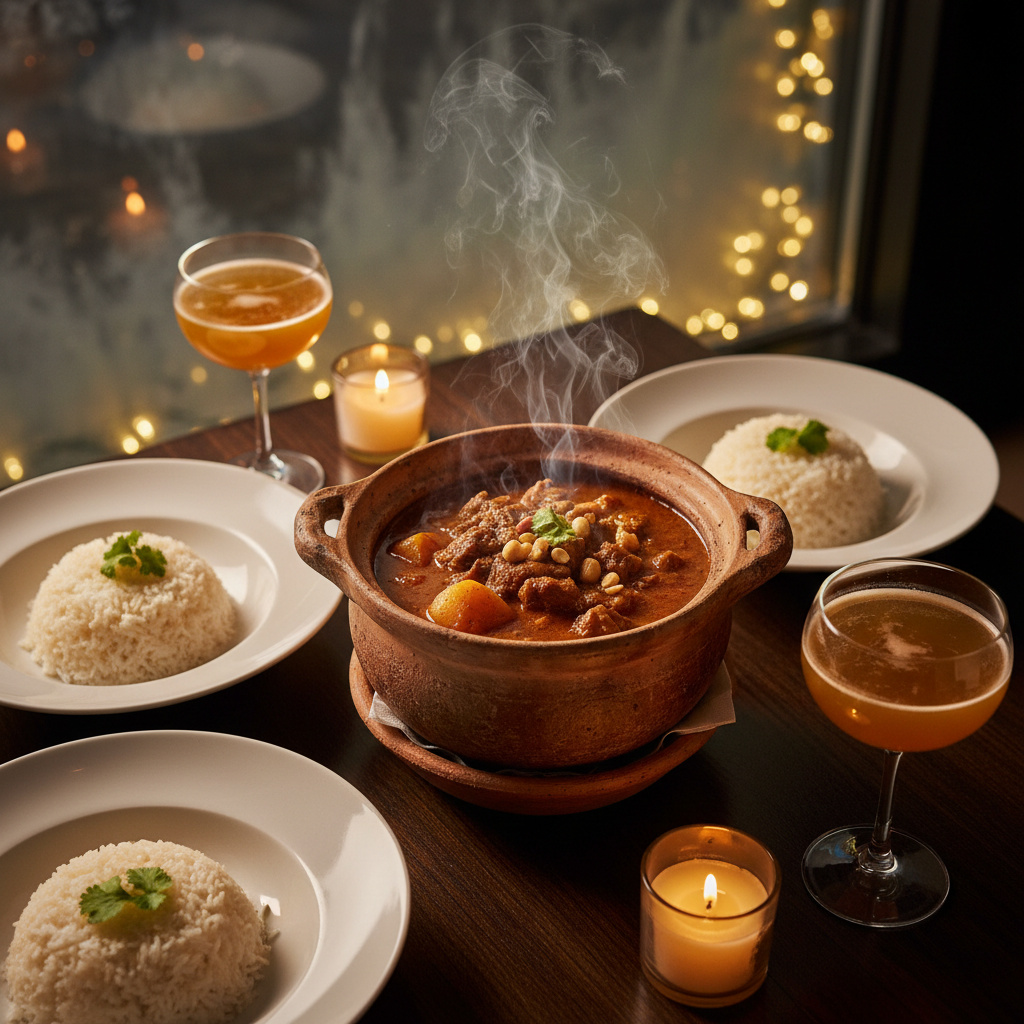
You could launch a limited-edition winter curry flight. Feature a rich, spiced Massaman curry alongside a slow-simmered, fiery green curry and a comforting Tom Yum hot pot. Combine this culinary experience with cozy, warm, spiced cocktails made with local spirits. Suddenly, you have transformed standard menu items into a festive culinary event.
Now, build a premium family catering package. Holiday office lunches represent a massive revenue opportunity for a Thai restaurant. Position your catering bundles as a unique, stress-free alternative to the standard cold sandwiches. Ensure your packaging is immaculate, your delivery is precise, and your brand message is unified. By focusing on convenience and distinct seasonal comfort, you can capture high-margin corporate dollars while your competitors are still trying to sell basic dinner plates.
The Gift Card Strategy: Securing Immediate Cash Flow
If you want to survive the brutal post-holiday industry slump in January and February, you need to use gift cards as a tactical weapon. Gift cards are brilliant because they provide immediate positive cash flow. They secure future guest visits when the cold weather keeps people indoors.
But simply placing a cardboard sign next to your cash register will not cut it. You need a dedicated, conversion-focused strategy. Give your guests an absolute no-brainer of a deal to buy them now. This is where the classic bonus card structure excels.
Run a promotion where every hundred dollars spent on gift cards earns the buyer a twenty-dollar bonus card. But here is the critical operational trick: make that bonus card valid only from January second through February twenty-eighth. You are shifting demand from your busiest weeks directly into your slowest winter valley. This is how you level out your revenue peaks and valleys to keep your kitchens stable.
What if instead of discounting your hard work, you elevated the experience? Instead of selling simple cash-value cards, sell packaged experiences. Create a “Date Night in Bangkok” gift package that includes a multi-course dinner, paired drinks, and an exclusive dessert. Package this into a beautiful physical box. This turns a simple gift card into a high-end, premium gift that people are proud to give.
Operational Discipline Under Pressure
A brilliant marketing campaign that brings in hundreds of new guests is worthless if your operations fail. If your kitchen gets backed up, your ingredient supply chains break, or your hosts-of-house are overwhelmed, you will damage your hard-earned reputation. Operational readiness is the foundation of marketing success.
You must locked in your ingredient supply lines weeks in advance. If your seasonal curries rely on imported ingredients, secure those orders early to avoid high-volume winter delays. Create simple, streamlined kitchen prep sheets to handle high volumes without slowing down your ticket times. TACTICAL execution in the kitchen is what makes your media spend profitable.
Equally important is training your service staff. Every single staff member must be an active sales agent during your seasonal push. Train your hosts to suggest your seasonal cocktails the moment guests sit down. Keep your servers focused on upselling your limited-edition dishes. This proactive team effort is how you turn a minor margin bump into major bottom-line revenue.
The Actionable Battle Plan
Do do not wait for the holiday season to run you over. Take control of your culinary calendar and build your systems today. Your path to winter success starts with basic, immediate steps that you can execute this week.
First, pick one upcoming holiday or micro-season. Block out your calendar and count back exactly eight weeks from that date. That is your absolute deadline to finalize your menu items and your targeted offers.
Next, design your promotion strategy. Create your email templates, set up your SMS shortcodes, and schedule your social media teasers. Do not rely on luck. Build a structured roadmap that schedules every customer interaction.
Finally, measure everything. Track every dollar, monitor every coupon code, and analyze your average check sizes. Build a repository of hard analytical data so that each seasonal loop you run becomes faster, smarter, and significantly more profitable. Stand firm, execute with precision, and watch your restaurant thrive. Let us get to work.
Book a 15 minute discovery call to find out more today at https://digifidelis.com/calendar/










[…] businesses: Grants, tax breaks, and low-interest loans tailored for veteran businesses. […]
[…] platforms like Instagram and Facebook to create […]
[…] Examples of Workflow […]
[…] Automation tools collect and analyze data, giving you insights to make smarter choices. Google Analytics, for instance, tracks website…
[…] like LinkedIn and Instagram are powerful networking tools. Share valuable content, engage with industry leaders, and showcase […]